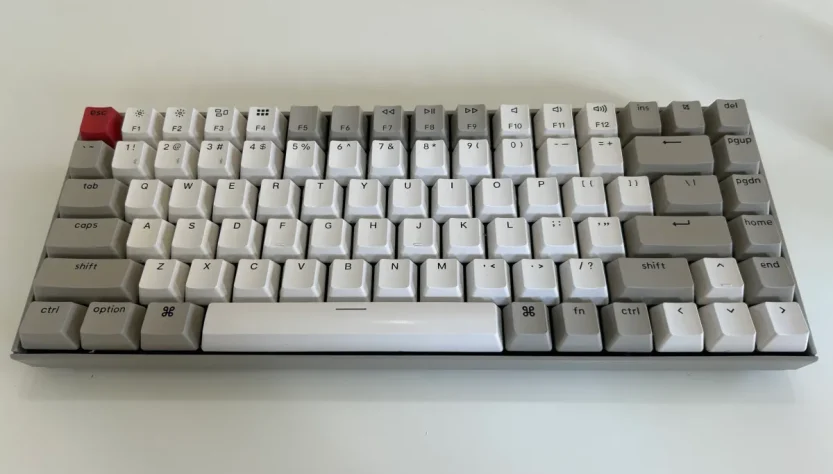
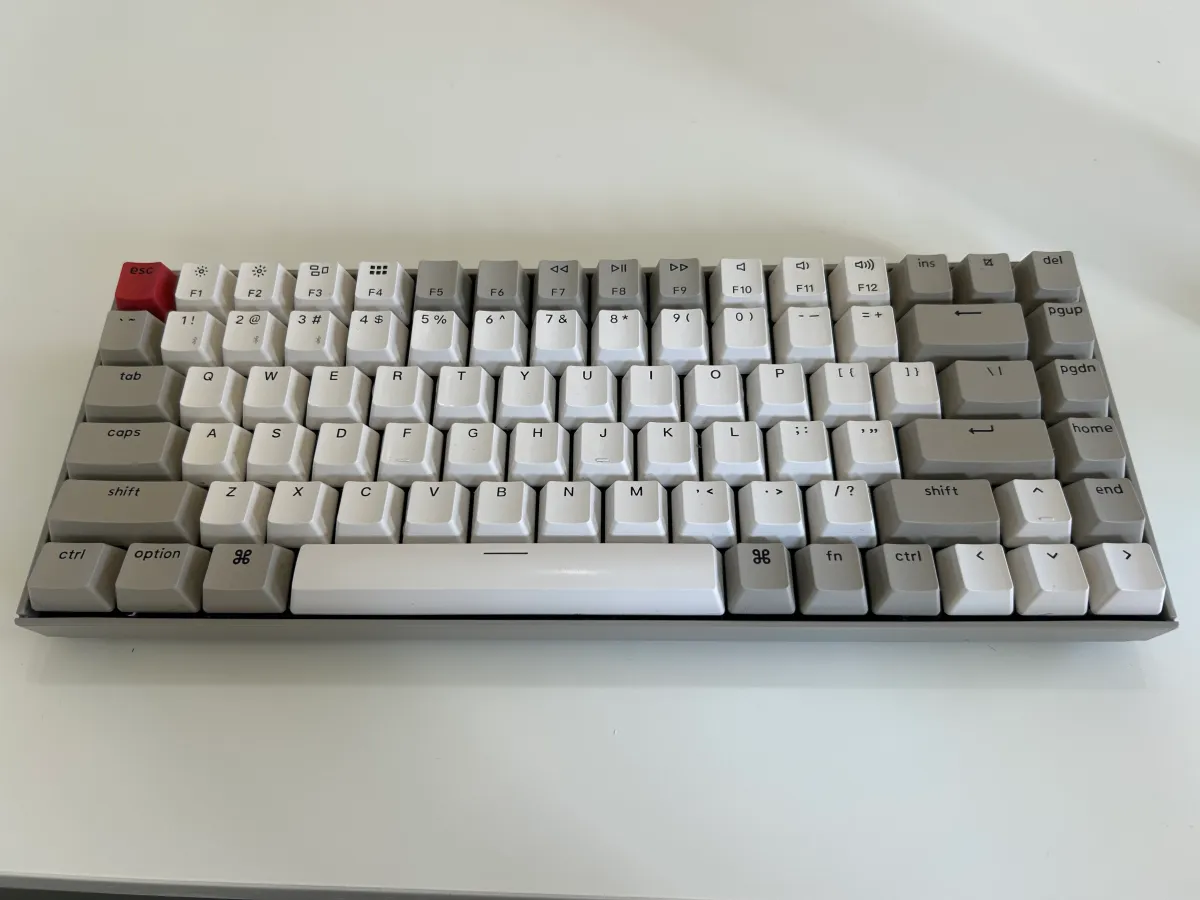
For a writer, the mechanical keyboard is a beautiful thing. They’re certainly not necessary for everyone, but a well designed mechanical keyboard can turn a tedious day of typing into an aesthetically pleasing experience.
Given that most of my days involve sitting at a desk for hours, having a keyboard that I enjoy using is a necessity. I first got a mechanical keyboard about two years ago — the Keychron K2 — and I’ve never looked back.
Keychron is one of the most prominent brands within the mechanical keyboard industry, having made a name for itself after initially launching via Kickstarter back in 2017. The company has since produced dozens of different keyboards (as well as keypads), and a variety of mouse models.
Unlike other electronics, there isn’t a whole lot to owning a mechanical keyboard. The simplicity is part of the appeal. You unbox them, set them up (the K2 comes with little tilt legs that give you a slightly better angle from which to type), and plug them in.
From here, you have a couple of different options. The K2 comes with a simple USB cable, but there’s also an option for Bluetooth connection. If you value a clean, minimalist workspace, Bluetooth is probably the way to go.
While I am loyal to my older Keychron K2, there are a few upgraded and newer versions to consider. Keychron has released a variety of new models over the past two years, with a broad range of features and price tags.
In many cases, the form factor is the draw. One of the more interesting releases, called the Keychron K8 HE Wireless Magnetic Switch Custom Keyboard, comes with an all-wood body and is equipped with an LED backlight. That one is substantially more expensive at around $200. The K2, meanwhile, costs $60. But if you’re into the look, maybe it’s worth it.
If you’re a gamer, there’s also Keychron’s C0 HE One-Handed 8K Keyboard, which is a keypad built for convenience and speed and has an industrial aesthetic to it. However, interested gamers will have to wait — as it’s currently sold out.
The company has also updated its K, Q, and V series keyboards, with many of those ranging in price from $100 to $200 depending on the features and model.
One of the appealing elements of owning a mechanical keyboards is the versatility. You can swap out the key caps for a wide variety of others (indeed, there’s a whole sub-market devoted to this) or make your own custom caps (I’ve never gone that overboard).
There is also the sound, of course. Some people balk at the accentuated noise of loudly clacking keys, but I’m a fan. In fact, the sound is one of the key selling points for a lot of consumers. The distinct auditory experience produced by said keyboards has even made its way into ASMR videos.
For me, the Keychron’s biggest selling point is its retro form factor. I get really nostalgic for old school electronics, and Keychron scratches this itch pretty well. It’s a beautiful looking device, that brings to mind a different era of computing, when the style was more workman-like, less minimalist.
As far as home office purchases go, you could do a lot worse than to pick yourself up a piece of hardware that makes your desk look like it just time-traveled from the 1990s.
When you purchase through links in our articles, we may earn a small commission. This doesn’t affect our editorial independence.