Flipper Devices, headquartered in London, is recognized for its Flipper Zero device, which is utilized by hackers and enthusiasts to interface with various radios including Bluetooth, RFID, NFC, and a sub-1GHz transceiver. Today, the company has ventured into new territory by introducing a productivity-centric gadget named Busy Bar, designed to assist in setting timers, blocking applications, and showcasing custom messages and widgets on an LED screen.
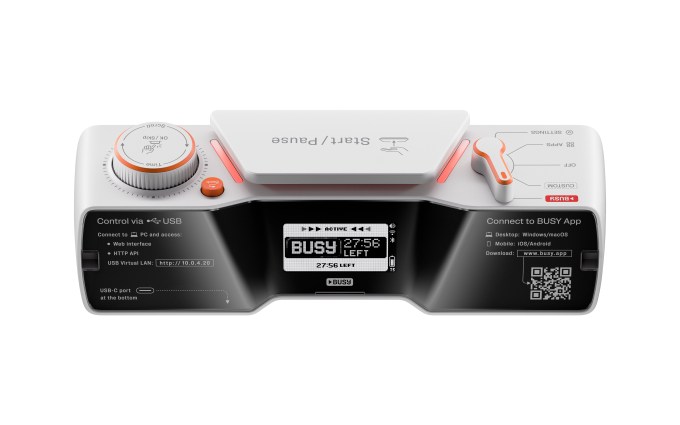
The company revealed the device last year and is set to make it available for purchase next month. The Busy Bar resembles a conventional table clock, equipped with several knobs and buttons. The front features a 72×16 LED matrix display boasting up to 400 nits of brightness, the capability to display 16 million colors, and an automatic brightness adjustment sensor.
On its rear, there is a monochrome display that shows the status, timer, battery, and connectivity status indicators. This allows users to access information even when the main screen is turned away. Additionally, a small speaker on the side enables the playback of custom sounds and notifications.
Image Credits:Flipper Devices
At the top, there is a mode selector, a start/stop button, an indicator light, and a scroll wheel to navigate through menus and adjust the time. The device includes options for Wi-Fi, Bluetooth, and USB connectivity.
The Busy Bar features a 3250 mAh battery, capable of providing up to eight hours of active usage and up to two weeks of standby time. The company states that using a 15W charger, users can completely recharge the device in just one hour.
This device’s concept is to allow users to set messages that inform others (and themselves) about the task they are engaged in. This is particularly beneficial in a work-from-home scenario where there may be other individuals in the vicinity. Furthermore, users can set Pomodoro-style timers for dedicated productivity sessions to help focus on task completion.
Flipper Devices is developing applications for iOS, Android, and macOS, with plans for a Windows app as well. Users can block specific apps using various timer types on iOS and Android. Additionally, there is microphone integration with macOS, allowing the device to indicate “on call” status on the screen and mute notifications during meetings or while recording or streaming.
The Busy Bar is also certified as Matter-compatible, allowing it to integrate seamlessly with existing smart home systems across Amazon, Apple, and Google platforms. This enables users to initiate smart home automations based on the device’s status.
The device has been designed with developers in mind, allowing for customization through open firmware. They can leverage open HTTP API, MQTT, along with official Python and TypeScript libraries to create widgets and components. Additionally, users have the capacity to manage the Busy Bar remotely via its cloud API.
The initial 3,000 customers can acquire the device for $199, while subsequent buyers will need to pay $249. Shipping and sales are set to commence from July 14 to the U.S., EU, U.K., and Canada. The company also intends to offer accessories such as wall mounts, screen protectors, and specialized switches.
When you purchase through links in our articles, we may earn a small commission. This doesn’t affect our editorial independence.
The demand for computing power driven by AI has data centers striving to extract more from each GPU rack. One result? Bacterial proliferations.
The fluid used for liquid-cooled chips consists of water mixed with an agent that prevents bacterial growth. To operate the chips at higher temperatures, data center administrators can adjust the mixture to contain more water, which is more efficient at heat absorption, but this can lead to harmful contamination that obstructs the flow. To address this issue, they must flush the system, often requiring a rack to be offline for five or six hours, potentially resulting in losses amounting to millions of dollars.
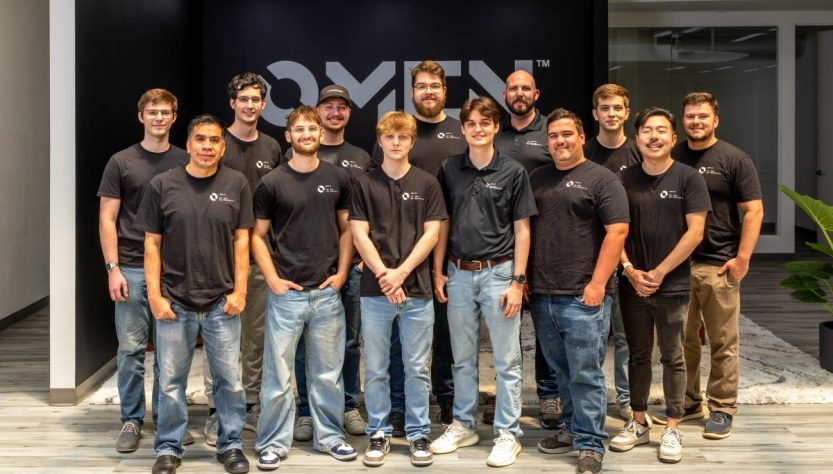
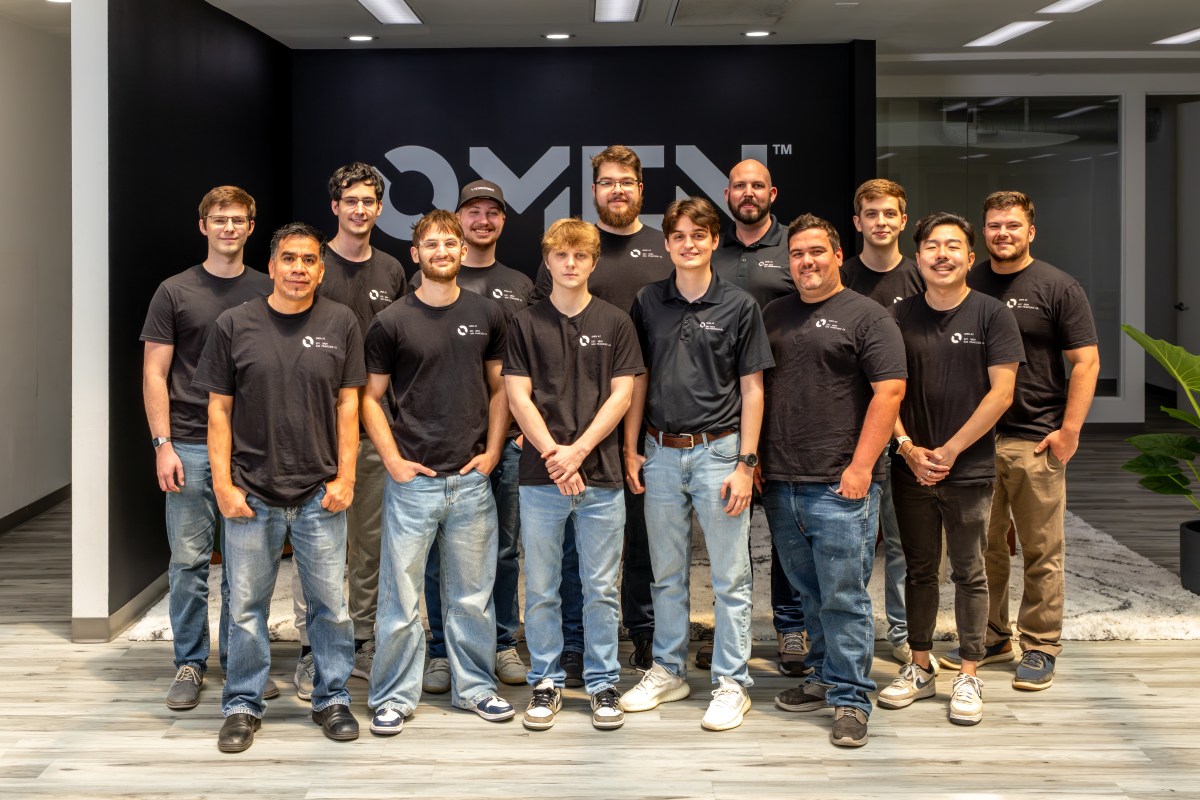
Omen AI offers a solution: a small spectrometer capable of real-time monitoring of fluid quality, detecting bacterial growth before it evolves into a significant issue. “You’re avoiding substantial downtime by having insight into the chemical conditions,” states CEO and founder Zach Laberge.
Omen AI announced today it has secured a $31 million Series A funding round, spearheaded by Nava Ventures, with contributions from CRV, Vanderbilt University, Mann+Hummel, Starhill Holdings, and Hard Launch Capital, alongside personal investments from executives at Bridgestone, GM, Johnson Controls, and TensorWave.
Laberge launched his first company in 2020 at the age of 14, raising $3 million to implement sensors on construction equipment before ultimately leaving high school. (His parents, including a former Ontario Minister of Education, supported his ambition to forge his own path.)
Following the closure of that startup, Laberge founded Omen in 2024, aiming to concentrate on fluid systems as a method to enable construction machinery to detect when repairs are needed. The goal was to replace the laborious process of sample collection and laboratory analysis with real-time detection. In addition to monitoring bacterial growth, the device can identify pump wear by detecting copper or chromium, or seal degradation by recognizing silicon.
Caterpillar dealerships became a significant initial client for Omen’s heavy machinery sector, but Cat is also a leading supplier of gas-powered turbines and generators for on-site power to data centers. It wasn’t long before Omen recognized the market trend.
“That was kind of the shift,” Laberge shared with TechCrunch. About six months prior, “many of the dealerships were expressing, ‘Hey, we’re starting to install sensors on our turbines, can you provide anything for the building sector?’”
Omen found that those buildings contain a variety of fluids, from HVAC systems to chip cooling solutions. Noticing a rapidly growing pool of prospective clients, Omen redirected its focus towards data centers.
“It’s uncommon to encounter such a youthful founder who commands the respect of established, large corporations in an industry that tends to move at a slower pace,” remarked Cory Rellas, a partner at Nava Ventures who serves on Omen’s board. “For Omen specifically, much of our due diligence stemmed from our introductions with large customers, which quickly affirmed their strategy.”
Having raised $40 million since its inception in 2024, Omen is collaborating with a dozen data center clients as they enhance their offerings, including TensorWave, a firm building an AI compute cloud utilizing AMD chips.
“The fluid circulating through these massive systems is a crucial variable that most of the industry is navigating without visibility,” stated Piotr Tomasik, president of TensorWave. “Omen … shares our vision for the future of infrastructure, focusing on improved monitoring to optimally support compute customers.”
While numerous organizations depend on mailing fluid samples to labs for analysis, Omen is not the only one developing in-house analytics — Pyxis, a well-established water-monitoring company, launched its data center coolant monitoring product earlier this month.
The significant technological advancements that enabled this method are recent enhancements in both optical technology and signal processing software. “Hardware has become inexpensive enough to allow for scaling, and signal processing helps us derive more meaning from the data,” Laberge noted.
When you purchase through links in our articles, we may earn a small commission. This doesn’t affect our editorial independence.
This week, streaming advertisements may become significantly quieter.
A law in California that prohibits streaming platforms from displaying ads “louder than the accompanying video content” is scheduled to be enforced on Wednesday, July 1. (Current laws already impose similar volume limits on television commercials in both broadcasting and cable.)
Ars Technica points out that streaming platforms have not disclosed further information on how they will adhere to the legislation. Although the volume restrictions currently only affect California, any necessary adjustments are likely to be implemented on a wider scale, particularly with a comparable measure about to be enacted in Illinois next year.
When the legislation was enacted in 2025, its proponent, State Senator Thomas Umberg, remarked that it was motivated by “every weary parent who has finally managed to put a baby to sleep, only to have a loud streaming advertisement ruin all their efforts.”
Trade organizations such as the Motion Picture Association of America and the Streaming Innovation Alliance opposed the legislation, asserting that streaming services were already taking steps to resolve the problem, while also highlighting the challenges posed by varying output devices, including televisions, tablets, and smartphones.
Ford officials announced the recruitment of 350 experienced engineers — including some former employees and others from supplier companies — after artificial intelligence and automated systems did not meet the expected quality standards.
According to Bloomberg, the company’s COO Kumar Galhotra informed reporters that Ford had increasingly depended on automated quality control systems, leading to unsatisfactory outcomes. Consequently, the company “reinstated technical experts,” who “identify failure points before any component gets to the production floor.”
Charles Poon, Ford’s VP of vehicle hardware engineering, stated, “We mistakenly believed that simply implementing artificial intelligence and incorporating our design requirements would yield a high-quality product.”
It’s important to note that this does not imply Ford is completely abandoning its AI initiatives. Instead, the rehired workforce — termed “gray beard” engineers — is tasked with mentoring younger employees and recalibrating AI systems.
This reintegration appears to be yielding positive results, leading Ford CEO Jim Farley to mention benefits such as reduced warranty and recall expenses, “providing literally hundreds and hundreds of millions of dollars of support for Ford’s costs.” The automaker also claimed the leading position among mainstream brands in the JD Power Initial Quality Survey released this week.
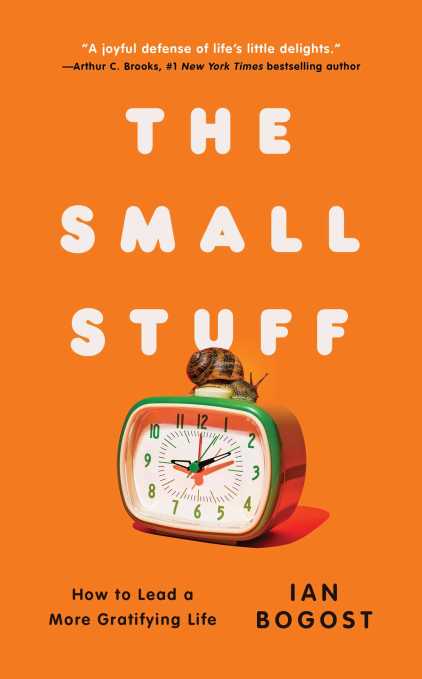
In spite of its self-improvement title, writer/designer/academic Ian Bogost’s upcoming book “The Small Stuff: How to Lead a More Gratifying Life” poses critical inquiries about how technology has changed our interactions with the physical world. Drawing on Bogost’s well-known article in the Atlantic regarding the diminishing prevalence of stick shift cars, “The Small Stuff” contends that numerous elements of our everyday existence — from vehicles to doorways to restrooms — have become less tangible.
“Essentially, it’s the notion that we have become detached from the sensory environment, and the reason for that shift is what could be termed convenience technologies,” Bogost explained to me, while quickly emphasizing that technology is not the sole factor driving this transformation. “Many factors — not merely tech, and certainly not only Silicon Valley-style technology — have alienated individuals from the world they occupy, stripping away the richness of daily living.”
In fact, while acknowledging other books that critique the tech sector, Bogost mentioned that he’s grown “somewhat weary of the ongoing critique.” Consequently, he is currently less concentrated on advocating for sweeping societal change and more on discovering “gratification” in routine sensory encounters.
“It places a heavy burden on average individuals to assert, ‘Well, we just need to resolve wealth inequality or capitalism, and then we’ll be free to enjoy our lives completely,’” he remarked. “Average individuals shouldn’t have to wait for that.”
During our conversation (which I’ve condensed for brevity and clarity), we also explored the balance between convenience and experience, how Silicon Valley might improve, and the “hipster reclamation of nostalgia.”
You authored this excellent piece about the stick shift. How did that lead to these broader ideas about “the small stuff”? How did you come to realize there was a book in this?
I penned the stick shift article in 2022. At its core, it conveyed: People have been mourning the fall of the stick shift for ages, but electric vehicles have made it tangible, as they lack transmissions. Assuming that EVs are eventually going to gain widespread acceptance, which I believe is inevitable, then this truly is the conclusion.
You [write] a story and think, “Well, that was enjoyable, a nice little piece, I’ll share it online.” That one really resonated. The reaction was immense. I became thoroughly fascinated by the why. Is it merely that people cherish their stick shift vehicles? I didn’t think so.
I spent a year contemplating it, on and off [and] I recognized, indeed, I’ve been engaged in this longer than anticipated. I revisited writings about toasters and smoothies or slushies, or my catalog of interests, and the ordinary aspects of life captivate me deeply, though I’ve never fully understood why. Is there something amiss with me? Am I just eccentric?
It dawned on me, through the stick shift, that daily life is not just intriguing but profoundly, profoundly significant, and we have undervalued it. Something like the stick shift, rich with both symbolic and genuine significance for individuals, opens a window, and you sense the breeze entering, and you’re like, “Ah yes, the breeze.”
Let’s delve into the concept of dematerialization, since the book is organized around it. The first half delves into describing and diagnosing, while [the second half discusses] solutions, remedies. Would you like to clarify what dematerialization entails?
Essentially, it’s the understanding that we have become untethered from the sensory environment, and the cause of this is what you might describe as convenience technologies. However, it’s not solely technology; there’s also bureaucracy, efficiency, economics, and regulatory systems. Numerous factors — not just tech, and certainly not exclusively Silicon Valley-style technology — have distanced individuals from the world they inhabit and have removed the depth of everyday existence.
A favored illustration of this, one that seems to resonate with many, is: You visit the airport restroom, having just disembarked your flight, and the toilet flushes automatically, the sink activates itself, the towels are dispensed for you, the soap is distributed for you — or sometimes it doesn’t work at all, right? It often fails to function, but that realization: This task that I used to perform with my physical body and senses is now something I no longer engage with. This is quite commonplace and has, broadly speaking, been influenced by developments that have genuinely improved our lives. However, we didn’t recognize that we were sacrificing the connection to the tangible world in pursuit of progress.
That’s what dematerialization signifies for me, this array of circumstances that has distanced us from our sensory realities.
Image Credits:Simon & Schuster
That part regarding the restroom was particularly vivid for me, as you’re not only addressing the usage of these items, but the experience of them not functioning correctly for you.
You become aware of them when they fail to function, and that friction reveals the issue. In many instances, we’re oblivious to a problem, or we sense that something is off but are unclear on what it is.
One point you also emphasize is: Many of these alterations have, in some respects, enhanced our lives. You mentioned there’s a tradeoff, similar to the case of the stick shift and automatic, then you also include electric vehicles —
There are numerous people out there who’ve championed stick shift cars while simultaneously arguing, “Internal combustion engines are the sole option, and we must adhere to the purity of burning dinosaurs.”
I don’t hold that perspective at all. Using Uber, streaming music, enjoying DoorDash, and even some promises of automated fixtures — I mean, some are questionable, but I broadly understand — I think it’s crucial we acknowledge that our lives overall have improved, but something transpired that we didn’t perceive, in a gradual, unnoticed way.
I greatly admire Cory Doctorow, but these [claims that] “This system of economics and technological values is evidently the source of all our troubles, and I’m going to label it enshittification,” just to use a notably popular example. People clearly seek an explanation, yet then you think, “Yeah, but I enjoy Amazon Prime, I appreciate the ability to search Google for info.”
So I’m trying to balance being truthful about the fact that our lives are comparatively better, that this isn’t merely a Silicon Valley issue, in fact, it’s much broader, and it occurs so gradually that we failed to notice.
One noteworthy aspect of the book, which contrasts with what I’ve read from Doctorow or [Jenny Odell’s book] “How to Do Nothing” — there’s a cluster of such books — is that your book carries a less accusatory tone. There’s a strain of critique, but it doesn’t resonate with the same intensity.
Personally, I’ve been critiquing technology for an extended period, and I don’t find it arrogant to say I was ahead of the curve in critiquing Silicon Valley-style technological progress. I was discussing Facebook and social media long before many people were concerned, and that felt quite isolating.
Yet I feel somewhat fatigued by the never-ending critique, and I believe it often misdiagnoses or overdiagnoses the issue. It’s comforting to think in terms of clear dichotomies of good versus bad, or that there’s a straightforward explanation, and once we grasp the explanation, we simply need to unwind it, and everything will then be fine.
I would like to address the Silicon Valley aspect of this. Although this isn’t solely about Silicon Valley, many of the concepts you’re discussing resonate with the notion that numerous consumer tech products and services prioritize convenience and speed. Reading this book, along with related works, I sometimes get the impression: Are all these companies merely chasing misguided objectives?
I definitely think that the fixation on efficiency, automation, invisibility, transparency, and scale fuels that aspiration. “We’re going to simplify everything, so you don’t have to engage with it.” That’s a succinct summary of recent years.
Some of that motivation stemmed from positive intentions, like with Uber. Recall when it was difficult to hail a taxi in cities other than New York? Now it’s remarkably straightforward. You could romanticize that and claim that [convenience] is irrelevant, but it truly matters.
Instead of assigning blame to either technology, industry, or everyday individuals for their apparent naivety in failing to notice or willingly surrendering their lives, I simply believe it unfolded over an extended timeframe, so gradually, and with such widespread endorsement, that both consumers and the organizations providing these services were stating, “Here’s the arrangement,” and everyone responded, “Yes, I’m in; I don’t want to buy CDs anymore, Spotify sounds fantastic, count me in.”
In actuality, we felt we comprehended the arrangement, but we didn’t fully grasp it. We didn’t entirely account for the fact that we are physical beings, embodied beings, and that is perhaps where I would place some of the blame more squarely on the culture surrounding Silicon Valley. You see it manifest today, this concept that I can transcend my physicality, I can achieve immortality — whether through transhumanism, singularitarianism, or simply eternal life through efficiency and optimization. That notion has always been central to the general-purpose computer, that it can sift through any experience and convert it into a computational entity.
And thankfully, we cannot escape our bodies. Yet, in the Valley, there remains this odd sentiment that the embodied human experience is unnecessary, extraneous. And that’s erroneous.
The book is tailored for a wider audience, but I’m curious about entrepreneurs or individuals creating products: Are there encouraging instances you’ve observed where people can approach that tradeoff differently? It’s not solely about optimizing for convenience, but perhaps achieving a balance between convenience and sensory experience?
If you rewind to how computers transitioned from data analysis instruments to cultural tools, starting in the 1960s, there was a strong belief that you could articulate yourself through [computers], while also establishing a human connection with them was essential. In the 1970s, at Xerox PARC and Apple, there was a strong emphasis on a computational approach to human factors engineering, acknowledging that my body must fit in the chair or fit through the doorway, which was incredibly significant to computing for many years, until the 1990s. Once the 2000s rolled in, coinciding with the true cultural takeover by computation, I believe that’s when we began deviating from that effort of negotiating the relationship between computing and individuals.
What this illustrates is that the act of engaging in something is also vital, not merely the outcome. We became excessively fixated on the result and then downplayed the experience of engaging in activities, and now we find ourselves in a situation where, if you discuss the experience of engaging in a task with what might be referred to as the stereotypical Silicon Valley entrepreneur, they’ll respond, “Why bother? We can automate that. AI will handle it. We can outsource it to the Philippines.”
There exists a plethora of solutions designed to eliminate the bother of engaging with that experiential element, and it turns out: No, I wish to have those experiences because they form a component of my humanity and vitality, even if they seem trivial individually. You know, who really cares about the sensation of the ice in my water bottle? Yet, as I argue in the book, over time, all those minor aspects accumulate, they carry profound significance, and when you eliminate them, you genuinely perceive what’s absent.
The overarching message is: The experience is significant. The experience of utilizing products and services holds importance, not solely the outcomes they deliver. It feels somewhat amusing to articulate this in response to your inquiry, for I think if you posed the question to any UX designer in Silicon Valley, “Do you prioritize that?” They’d respond, “Absolutely, we consider that constantly; it’s incredibly valuable to us.”
However, I don’t believe they are. They believe they are, but have lost sight of their actual actions, which is stripping it away.
I admire that the book is deeply grounded in personal and sensory experiences. However, as someone who’s 43 and has encountered many of these sentiments, I start to feel slightly skeptical about myself. Am I just an old person yearning for [the experiences of my youth]? How do you navigate these thoughts in a manner that doesn’t revolve around idealizing the past?
It’s incredibly easy to descend into nostalgia, and I believe there’s a prevailing current of desire directed toward so-called analog culture. For instance, “I’m going to acquire a Walkman again, and that will resolve my issues.”
I have several reflections on this. First, I articulate this argument quite clearly in the book: We’re not heading back. We exist in the present, moving towards the future, and we don’t reside in the past. Mourning what has come before and been lost can be helpful in orienting oneself, but it doesn’t truly assist in living your life.
I adore, adore, adore the telephone; I cherish the old-school Western Electric-style handset, I love its intimacy, I appreciate how it feels in my hand, I adore the weight of it. [But now] we use Zoom, or at best we’re utilizing our headphones. That’s not going to change. So rather than regard that example as, “Ah, if only we could revert and perhaps engage in this hipster reclaiming of nostalgia” — okay, that serves as an intriguing signal. I recall that, and it held meaning for me, serving as a good way to align yourself with your actual sensory existence.
Now, the wonderful aspect is that, whether you’re 43 or 23, you still possess a human body. You inhabit the world, and we are in it together, so constantly surrounding us are opportunities to experience similar instances but in varied manners.
One of the aspects I appreciate about Zoom over traditional telephones is that I can enjoy this auditory connection with myself and with you, which is very sonically satisfying, something I don’t experience on a compressed digital line. Thus, that’s one response. Nostalgia can serve as a guide, but it’s indulgent to believe that you can dwell in the past. If it’s purely mournful, what’s the benefit?
The second point I’d like to highlight is this: There’s been a lot of discussion about friction recently, with sentiments like, “We need to reintroduce friction,” and I believe that perspective is also flawed.
Everything became exceedingly smooth and slippery. It literally did, due to our smartphones which have a slick surface. But then, because of efficiency and convenience, everything started to feel incredibly frictionless, and the opposite of frictionlessness is, indeed, friction.
However, you don’t genuinely desire things to be challenging or to obstruct your path. Instead, you want the experience of feeling yourself engaging with them, which varies significantly from the approach of, “Oh, that should be difficult; I need to introduce barriers in my way.”
I also wished to inquire about the connection between the small details in the title of the book and the broader transformations within society. I concur that our lives have become dematerialized and disconnected from sensory experience, but it seems you’re not concerned that eventually, the areas of physical or sensory joy or satisfaction will simply vanish, or become insignificantly small.
I perceive it as a very nuanced, complex issue. Yes, that’s precisely my assertion, but we seem to hold this belief that it’s not the case somehow. We’re obsessed with the notion that something crucial has been lost that cannot be reclaimed or that which requires substantial cultural, social, economic, regulatory, or any other form of change to recover.
Now, I’m not opposed to such grand alterations. I don’t know how simple or probable it is to achieve. It seems excessive to expect average people to say, “Well, we simply need to rectify wealth inequality or capitalism, and then we’ll be able to return to fully engaging in our lives.” We cannot remain passive and wait for that. Ordinary individuals shouldn’t have to wait.
I would truly appreciate it if industry, governmental, and civic organization leaders would take it upon themselves, in their respective contexts, to foster more small stuff-oriented, gratifying opportunities for the populace.
An instance of this is the entire discourse surrounding remote work, office work, and what one engages in daily at their email job or similar. Clearly, if you manage an organization, you possess some degree of influence over what individuals are indeed doing and how.
Nevertheless, my neighbors don’t have that option, your aunt doesn’t have that option, yet they still need to navigate their sensory lives; there exists something they can undertake right now, in this moment, every day, rather than anxiously wringing their hands or perpetually posting on Facebook about how miserable everything is. We’ve attempted that for a while, and it doesn’t seem to have yielded any substantial benefits.
When you purchase through links in our articles, we may earn a small commission. This doesn’t affect our editorial independence.
The Moto Pad 70 Pro is a feature-rich rebranded Lenovo tablet set to debut in India for approximately $440, and it would be a timely addition to the US market at this moment.
Anthropic has reinstated access to Mythos 5 for a select group of reliable users, while indications imply that Fable 5 may make a comeback in a matter of days.
The identical memory shortage that drove Mac and iPad costs up by as much as $300 could also impact the iPhone 18 Pro, with IDC’s latest prediction indicating a $200 increase.
Mac purchasers are facing a surge in RAM upgrade costs on certain configurations, despite Apple’s upgrade pricing already being significantly higher than standard market rates.
The European Space Agency’s (ESA) Euclid space telescope has captured the most extensive and intricate visible-light image of the Milky Way’s galactic bulge, the core region of our galaxy. This image is a composite of over 60 million stars, along with nebulae and star clusters, assisting scientists in verifying exoplanets and measuring their masses with enhanced accuracy. Although Euclid was designed for studying distant galaxies, its camera manages to image the Milky Way’s luminous, dense core, achieved in just 26 hours on March 23, 2025. The mosaic, created from nine exposures, encompasses an area larger than that of the full moon, with Euclid’s imaging area being 270 times that of Hubble’s field of view and significantly quicker—Keck Observatory would need roughly 2,000 hours for the same coverage. This latest image of the Milky Way in a star-laden region is perfect for exoplanet investigation through microlensing. Jean-Philippe Beaulieu remarked that almost 300 exoplanets have been identified using this method over two decades; the Euclid image features 51 known planetary systems and is expected to aid in discovering many more. Although Euclid’s brief observation period couldn’t identify new microlensing occurrences, it remains beneficial for assessing known planetary masses. Natalia Rektsini emphasized that Euclid supplies the essential historical data for upcoming microlensing occurrences that the Roman space telescope will observe. Euclid’s findings will serve as a benchmark for future missions, enabling comprehensive studies and accurate mass assessments of exoplanets. Valeria Pettorino pointed out that Euclid’s distinct data regarding the Milky Way’s center, offering a wide and clear perspective, also serves purposes for examining brown dwarfs, binary stars, stellar movements, and dust in our galaxy. This article, originally from WIRED Italia, was translated from Italian.
Confidenţialitatea ta este importantă pentru noi. Vrem să fim transparenţi și să îţi oferim posibilitatea să accepţi cookie-urile în funcţie de preferinţele tale. De ce cookie-uri? Le utilizăm pentru a optimiza funcţionalitatea site-ului web, a îmbunătăţi experienţa de navigare, a se integra cu reţele de socializare şi a afişa reclame relevante pentru interesele tale. Prin clic pe butonul "DA, ACCEPT" accepţi utilizarea modulelor cookie. Îţi poţi totodată schimba preferinţele în orice moment privind modulele cookie.Cookie settingsACCEPT
Privacy & Cookies Policy
Privacy Overview
This website uses cookies to improve your experience while you navigate through the website. Out of these cookies, the cookies that are categorized as necessary are stored on your browser as they are essential for the working of basic functionalities of the website. We also use third-party cookies that help us analyze and understand how you use this website. These cookies will be stored in your browser only with your consent. You also have the option to opt-out of these cookies. But opting out of some of these cookies may have an effect on your browsing experience.
Necessary cookies are absolutely essential for the website to function properly. This category only includes cookies that ensures basic functionalities and security features of the website. These cookies do not store any personal information.
Any cookies that may not be particularly necessary for the website to function and is used specifically to collect user personal data via analytics, ads, other embedded contents are termed as non-necessary cookies. It is mandatory to procure user consent prior to running these cookies on your website.