

South Korean technology leaders pledge more than $550 billion to alleviate ‘RAMageddon’

South Korean technology leaders pledge more than $550 billion to alleviate ‘RAMageddon’

The two leading memory chip manufacturers globally are set to invest $518 billion (~800 trillion won) to establish four new memory fabs in the southwestern region of South Korea, an area that has historically seen minimal semiconductor investment.

This announcement forms part of the country’s comprehensive national investment strategy covering semiconductors, AI data centers, and physical AI, which was revealed during a presidential briefing on Monday attended by the chairpersons of Samsung and SK Hynix. The plan is divided into three categories. In the memory chip sector, there is an allocation of $518 billion for the new fabs in the southwest, in addition to $52 billion for an HBM (high bandwidth memory) packaging hub in the central area. Furthermore, there is another $356 billion (550 trillion won) designated for AI data centers to be constructed by major Korean technology and energy firms like SK, GS, and Naver by 2035.

In total, South Korean tech firms have pledged to invest more than $900 billion in AI and the accompanying chip demands it generates. With this initiative, the country aims to elevate its status as an AI power player beyond its current standing. Presently, Samsung and SK Hynix (along with U.S. memory chip manufacturer Micron) are experiencing unprecedented demand due to what has been referred to as RAMageddon, a global shortage of memory chips driven by the AI expansion.

“Semiconductors, physical AI, and AI data centers constitute the triple axis for South Korea’s forthcoming industrial era,” President Jae Myung Lee stated in a televised address on Monday, designating 2026 as the year South Korea must solidify its position as an “irreplaceable” industrial force.

Lee emphasized that the existing chip facilities in Yongin and Pyeongtaek, located at the core of South Korea’s semiconductor belt just south of Seoul, have “already reached their limits,” urging companies to hasten investments in the southwest region to ensure that AI prosperity extends beyond the capital city. “We must secure overwhelming production capacity in advance,” he remarked.

However, Lee contested media claims that the government had pressured firms into these investments, stating that the decisions were based on the companies’ own assessments. “The government’s role is to harness its capabilities so that companies can invest without losses and with improved opportunities,” he was quoted as stating.

Samsung issued a separate press release on Monday, detailing plans to invest 2,655 trillion won (~$1.7 trillion) over the next ten years, with 425 trillion won allocated for the Honam region, located in the southwestern corner of the Korean peninsula. The company highlighted anticipated incentives related to power, water, workforce, and living conditions as significant factors in choosing Gwangju, approximately 300 kilometers south of Seoul, for a new semiconductor fab, along with an AI data center in Haenam, at the southernmost point of the peninsula.

This amount is not excessive compared to U.S. tech giants Alphabet, Amazon, Meta, and Microsoft, which will together invest $650 billion in AI infrastructure this year alone, as reported by Reuters.

Meanwhile, SK Group outlined a 2,100 trillion won (~$1.4 trillion) medium- to long-term investment strategy, with 1,100 trillion won earmarked for expanding semiconductor production capacity and 1,000 trillion won designated for AI data centers nationwide. SK Hynix, the group’s primary semiconductor subsidiary, is pivotal to the chip expansion agenda, while SK Telecom will spearhead the development of 15 gigawatts of AI data center capacity throughout the nation.

Whether these ambitions translate into reality remains uncertain. Deep tech industries such as semiconductors and AI do not respond to political or consumer demand timelines. Fabrication plants require years to construct, and the risk exists that by the time they are operational, the demand that necessitated their creation may have diminished, leaving companies with excess supply and declining prices. For the moment, the global AI chip supply chain, particularly those dependent on memory, will be observing closely to see if South Korea can successfully achieve its goals.

When you make a purchase through the links in our articles, we may earn a small commission. This does not influence our editorial independence.


Arena, the AI leaderboard that everyone utilizes, has now become a $100M enterprise.

Arena, the AI leaderboard that everyone utilizes, has now become a $100M enterprise.

Merely eight months post-launch of its commercial services, AI leaderboard provider Arena, which began as a research initiative at UC Berkeley in 2023, has achieved an annualized run-rate revenue of $100 million.

Arena is widely recognized for its renowned crowdsourced AI model performance leaderboard, created from more than 10 million user assessments. Its consumer site allows users to input a prompt that is directed to two models; subsequently, the user selects which model performed better.

Although Arena’s widely-used AI model leaderboard is available for free public access, the company started earning revenue from its platform in September with the launch of AI Evaluations, a service that provides model labs and enterprises with in-depth performance analytics sourced from its community.

Arena’s swift revenue increase indicates that its commercial products resonate with customers just as much as they do with its evaluator community, which is often attracted to the platform for early access to cutting-edge, frequently unreleased, AI models.

“Many people are unaware that our business is generating any revenue at all; they still perceive us as an open-source initiative,” stated Anastasios Angelopoulos, Arena’s co-founder and CEO, in an interview with TechCrunch.

While Arena refers to its revenue milestone as ARR—a term typically representing annualized recurring revenue—Angelopoulos explained that the company bills clients based on “consumption,” indicating that its revenue does not follow a recurring model.

Although Arena lacks direct rivals—Yupp, another crowdsourced AI model selection startup, ceased operations in March—Angelopoulos noted that the company competes “for the same dollar” with human labeling startups such as Mercor, Surge, and Scale AI, all of which aid model creators in enhancing their AI during post-training.

As AI providers seek to optimize model performance, their demand for post-training optimization services continues to grow. When Arena reported in January that it secured a $150 million Series A at a post-money valuation of $1.7 billion, its annualized revenue was $30 million.

In other news, Handshake’s gross annualized revenue from AI training has nearly doubled since January, rising from $550 million to almost $1 billion, according to a report by The Information in April. Mercor’s annualized revenue also surpassed $1 billion earlier this year, climbing from $500 million last September, as reported by The Information.

Arena evaluates models across various tasks including text, coding, vision, and image creation, as well as intricate, extended workflows through its newly launched Agent Mode.

Along with Angelopoulos (shown left), Arena was co-founded by fellow UC Berkeley postdoctoral researcher Wei-Lin Chiang (shown center), who acts as the startup’s CTO. The startup was also co-founded by Ion Stoica (shown right), the distinguished UC Berkeley professor and co-founder of Databricks, who guided the project prior to its incorporation as a company in April 2025.

Arena has amassed a total of $250 million from investors such as Felicis, Andreessen Horowitz, The House Fund, LDVP, Kleiner Perkins, Lightspeed Venture Partners, Laude Ventures, and UC Investments.

When you buy through links in our articles, we may earn a small commission. This doesn’t impact our editorial autonomy.

Cursor now offers a mobile application for directing your coding agent while on the move.

Cursor now offers a mobile application for directing your coding agent while on the move.

Cursor is not allowing the $60 billion acquisition by SpaceX to impede its progress.

On Monday, the firm revealed a new application named Cursor Mobile, aimed at users looking to initiate coding agents straight from their smartphones. The application aligns with the Cursor 2.0 updates introduced in October, which directed the platform towards autonomous coding agents. Through the mobile application, users can create new coding agents or engage with agents that were started via the desktop client.

Cursor’s transition to mobile mirrors the offerings from Anthropic and OpenAI, both of which provide methods for interacting with their coding solutions on mobile devices.

This is part of a larger trend in AI-assisted coding tools, which are progressively moving away from conventional coding and leaning toward the management of code-writing agents. With no necessity to browse extensive code repositories, many developers are transitioning from multi-screen desktop configurations to smartphones, enabling ongoing dialogues with remote agents.

In a recent discussion, Anthropic’s lead for Claude Code, Boris Cherny, mentioned he has largely embraced mobile AI coding as a consequence. “The majority of my coding is now done on my phone,” Cherny stated during the discussion. “Had you told me that six months back, I would have called you insane, but here we are.”

Trump administration endangers 92 GW of additional electricity provision with bureaucratic hurdles

Trump administration endangers 92 GW of additional electricity provision with bureaucratic hurdles

Delays in permitting instigated by the Trump administration jeopardize 92 gigawatts of renewable energy, even as the demand for electricity from AI data centers surges.

As per a recent study by consulting firm Wood Mackenzie, modifications in permitting and the withdrawal of federal funding have already resulted in the cancellation of 7 gigawatts of capacity generation on federal land for 2025. The increased scrutiny may lead to the cancellation of an additional 12 gigawatts on federal land and 80 gigawatts on private land.

The federal obstacles impact over $121 billion in energy sector investments, the report highlighted.

Electricity demand has risen in recent years following two decades with no increase, partly propelled by the growth of data centers to support the AI surge. Market analysts from BloombergNEF predict that the number and size of data centers will grow in the next decade, which will lead to their electricity consumption nearly tripling by 2035.

In the meantime, the Federal Energy Regulatory Commission is mandating grid operators to expedite grid connections, although it has done little to alleviate the bottleneck in new generating capacity, which has reached crisis levels in several areas. In the largest U.S. grid, which contains the most data centers, operators spent four years hindering new generating sources from connecting, effectively stalling supply amid rising demand. It’s no surprise that the public is dissatisfied, while tech companies are taking matters into their own hands by constructing their own power facilities on-site.

In instances where new power plants have been established in the U.S., renewables have contributed the most. Solar, batteries, and wind accounted for nearly 90% of the unprecedented 53 GW of new generating capacity added in 2025.

The heightened permitting challenges arose from a directive issued in August 2025 by Doug Burgum, U.S. Secretary of the Interior, aimed at “curtailing environmentally harmful wind and solar projects.” 

While the primary focus has been on wind and solar, energy storage initiatives have also faced cancellations, as identified in the Wood Mackenzie report. The majority of the permitting difficulties are localized in Oregon, Alabama, Maine, Minnesota, and Montana.

Solar initiatives located on or near private wetlands seem to be at the greatest risk, whereas wind farms have been evaluated under airspace regulations. It remains uncertain how solar projects will be impacted in the forthcoming years following the Trump administration’s recent decision to remove protections for 80% of U.S. wetlands. 

Burgum’s directive represents a significant departure from his earlier time as North Dakota’s governor, during which he facilitated the expansion of wind energy in the state and set a goal for reaching net-zero carbon emissions by 2030. As recently as 2024, he was extolling North Dakota’s abundant wind resources, which generated a third of the state’s electricity in 2022.

When you purchase through links in our articles, we may earn a small commission. This doesn’t affect our editorial independence.
TIDAL clamps down on AI-generated music by terminating monetization

TIDAL clamps down on AI-generated music by terminating monetization

The music streaming platform TIDAL has recently set its sights on AI-generated music by implementing a new guideline that will bar entirely AI-created music from generating revenue on its service. Moreover, TIDAL will employ automated systems to eliminate AI-generated tracks that try to impersonate an artist or band, as stated by the company.

“We are dedicated to safeguarding and valuing authentic creativity to ensure that an artist’s capability to engage with and nurture their audience among TIDAL subscribers is not hindered. Numerous users have expressed that they do not wish to be exposed to — or prompted to engage with — completely AI-generated music,” stated Tony Gervino, TIDAL EVP and editor-in-chief, in a statement.

He emphasized that TIDAL’s new guideline was not intended to “attack technological progress,” but instead aims to protect and honor “organic creativity” from artists.

With these updates, completely AI-generated music on TIDAL will be clearly labeled and marked as such, allowing listeners to notice an “AI” tag next to any tracks identified as fully AI. These songs will not be permitted to earn money or receive royalties, and will not qualify for direct sales to fans, as per the company’s announcement.

TIDAL’s guideline aligns with other policies in the streaming music industry, where platforms like Spotify, Apple Music, Deezer, and Qobuz have crafted their own regulations to tackle the rising influx of AI-generated songs populating their services. Spotify revamped its regulations last year to categorize AI music and more effectively filter out spam, while still recognizing that AI tools would be used in music creation to different extents. Apple Music has also adopted a tagging strategy.

Deezer, which reported that 44% of new music uploaded to its service daily is AI-generated, has adopted a stricter stance. It actively disallows AI tracks from recommendations and excludes them from its curated playlists. Additionally, it offers its AI detection technology to competitors and provides a user-facing tool that allows you to check if AI music has entered your playlists on rival services.

TIDAL’s guideline could serve as a fascinating experiment to see if demonetization might be the solution to mitigate the influx of AI music, which many listeners find unappealing.

“Contrary to what you might read elsewhere, AI’s domination of the music sector (and your recommendations) is not unavoidable if we implement even more rigorous measures now to monitor and regulate it,” highlighted Gervino.

The company indicated that the new guideline is a “living document,” signifying it will be subject to modifications as the industry develops. It will take effect on July 15, 2026.

When you purchase through links in our articles, we may earn a small commission. This doesn’t affect our editorial independence.

In a significant victory for privacy, the Supreme Court determines that geofence warrants are safeguarded by privacy rights.

In a significant victory for privacy, the Supreme Court determines that geofence warrants are safeguarded by privacy rights.

On Monday, the U.S. Supreme Court imposed restrictions on the use of “geofence” search warrants by law enforcement, marking a significant judicial decision that is anticipated to significantly impact privacy rights and policing across the nation.

In a 6-3 verdict, the highest court in the U.S. asserted that “an individual has a reasonable expectation of privacy in his cell-phone location information.” The ruling indicates that individuals hold privacy rights concerning the location data that their devices collect, along with the applications and services operating on them. 

As a result, the court determined that law enforcement must secure a search warrant when requesting location data from technology firms, like Google, including when seeking historical geofence location information. 

The Supreme Court emphasized that a search warrant is necessary to obtain geofence location data because users do not voluntarily provide their location data to companies like Google merely by using their services. If that were true, the “third-party doctrine,” which posits that individuals have no expectation of privacy regarding information they voluntarily disclose, would apply. In such instances, authorities aren’t required to obtain a search warrant when requesting user data from telecommunications companies, for instance. 

Geofence warrants empower law enforcement to compel tech firms to disclose information about the whereabouts of any of their countless users at a specific time, based on location data logged in the firms’ databases. Typically, officers will outline a region on a map and petition a judge to permit them to require tech companies, such as Google, to comb through their extensive repositories of user location data and identify which users were present during the sought-after time frame.

Critics contended that these often-called “reverse” search warrants are unconstitutional as they are fundamentally overreaching and encompass data from innocent individuals.

The court appeared to concur but refrained from outright prohibiting the use of geofence warrants, instead allowing police to refine their data requests when seeking a search warrant. 

In essence, the Supreme Court asserted that the 4th Amendment, which guards against unreasonable searches and seizures and effectively secures privacy rights, is applicable to location data gathered by companies such as Google from their users’ cellphones. The ruling does not prohibit law enforcement from accessing historical cellphone location data; it merely mandates that agencies acquire a search warrant when asking for geofence location information and demonstrate that there is probable cause that the subject might have perpetrated a crime. 

This ruling revolves around a case brought by Chatrie v. United States, where the defendant alleged that the government utilized evidence obtained through an unconstitutional search warrant during his bank robbery trial. Okello Chatrie’s legal team contended that geofence warrants enable investigators to “search first and develop suspicions later,” thereby undermining established protocols regarding how governmental entities request to search or seize data from companies. 

Typically, authorities must establish “probable cause” linking an individual to a crime to validate a search warrant, whereas opponents argue that geofence warrants operate inversely.

The Supreme Court took up the case following multiple legal disputes regarding geofence warrants, including Chatrie’s, which caused division among courts throughout the U.S., including at the appellate level.

The immediate implications of the ruling on previous court decisions remain unclear. A representative from the Department of Justice did not provide a response to a request for comments.

The ruling is not expected to alter Chatrie’s sentence, as earlier courts determined that the evidence obtained from the geofence warrant was collected in good faith. Chatrie’s lawyers did not reply to a request for comment from TechCrunch.

The Supreme Court determined that it is now up to the Appeals Court to ascertain whether the search warrant sought in the Chatrie case demonstrated probable cause and was therefore legitimate. 

Several companies frequently subjected to location data requests, including Google, have started to retain users’ location information on their devices rather than on their servers to avoid disclosing user data, leading investigators to approach users directly. Other firms storing location data, such as Microsoft, Uber, and Yahoo, also consistently receive geofence warrants.

When you purchase through links in our articles, we may earn a small commission. This doesn’t affect our editorial independence.
WhatsApp now enables you to secure usernames

WhatsApp now enables you to secure usernames

WhatsApp has unveiled a highly anticipated feature: usernames, permitting users to share their profiles without revealing their phone numbers. Nonetheless, a phone number is still necessary to set up an account on the messaging platform.

WhatsApp has been striving to integrate usernames for several years, and it is now prepared to explain their functionality.

From today onwards, the Meta-owned entity will allow users to reserve usernames, with the feature officially launching later this year. Individuals can select usernames consisting of 3 to 35 characters. The company has indicated it will reserve usernames for prominent figures, VIPs, and organizations. Beyond that, there are no limitations on username selection, provided it adheres to the company’s guidelines. Meta stated that businesses and creators can utilize their Facebook or Instagram usernames for their WhatsApp usernames to maintain consistency.

Users will be alerted once the username reservation feature is accessible in their region. Following that, they can navigate to Settings > Account > Username to pick their username. WhatsApp will also include an option for users to establish a unique username key that others must know in order to send them messages.

Loading the player…

Meta emphasized that the username reservation procedure is intended to prevent duplication among its user base of over 3 billion. The organization mentioned that usernames will not be searchable within the app, and only individuals who are aware of the exact username will be able to reach out to you. Furthermore, users can disable this feature or modify their usernames anytime.

“When you encounter someone new—be it a classmate, a neighbor, or an acquaintance from an event—sharing your phone number can seem like a significant step. Your phone number is personal and linked to various aspects of your life,” stated Alice Newton-Rex, vice president and head of Product at WhatsApp, during a briefing. “Thus, usernames are created to grant you control over who can view your phone number initially.”

Currently, users must communicate their usernames verbally or via text. There is no feature available for scanning a QR code to connect with someone without knowing their phone number.

Competing messaging platforms, such as Telegram, Signal, and Wire, have offered usernames for several years, enabling users to keep their phone numbers confidential. WhatsApp, which recently underwent a leadership change, is finally implementing this feature.

The article has been revised to indicate that usernames can range from 3 to 35 characters.

When you make a purchase through links in our articles, we may receive a small commission. This does not impact our editorial independence.
Rocket Lab persists in its acquisition trend by purchasing the satellite firm Iridium.

Rocket Lab persists in its acquisition trend by purchasing the satellite firm Iridium.

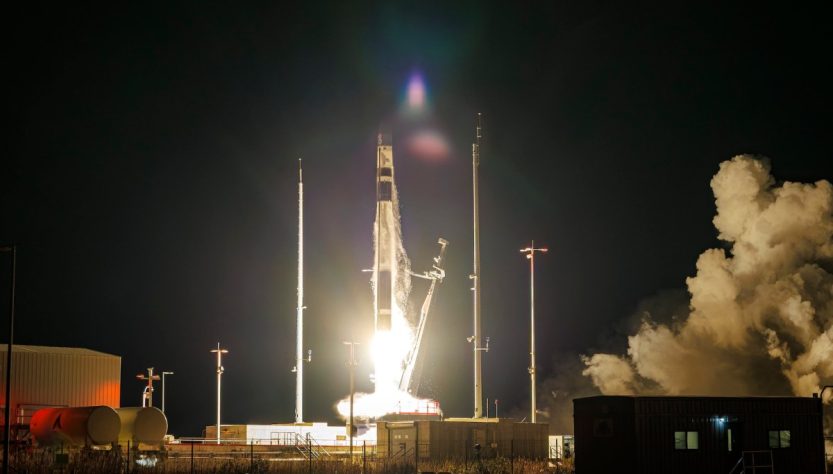
Rocket Lab, a launch firm, is acquiring satellite provider Iridium, positioning itself to evolve into a more comprehensive space services enterprise while continuing the trend of industry consolidation.

The transaction, which is still pending completion, will involve Rocket Lab purchasing Iridium’s shares at $54 apiece, attributing an $8 billion valuation to the satellite entity.

This marks one of several acquisitions for Rocket Lab within the current year. The firm previously acquired space robotics developer Motiv in May, laser communications supplier Mynaric in April, and a precision component maker in February. Last year, it also purchased optical sensor defense firm Geost.

Iridium not only manages numerous satellites that are currently orbiting but also possesses a significant portfolio of valuable spectrum. In a press release issued on Monday, Rocket Lab stated its intention to “build upon” Iridium’s existing network to “expand into uncharted markets and innovate new space-centric services for the advantage of global clients.”

The announcement from Rocket Lab follows years of consolidation within the space and satellite sector, with notable transactions including Viasat’s acquisition of Inmarsat, a private equity firm’s purchase of Maxar in 2023, and Lockheed Martin’s acquisition of satellite producer Terran Orbital in 2024. In April 2026, Amazon, which is developing a space-based internet rival to SpaceX’s Starlink, acquired satellite firm Globalstar for $11.6 billion.

Robot hand firm resolves Tesla trade secret lawsuit and reveals $11M funding round

Robot hand firm resolves Tesla trade secret lawsuit and reveals $11M funding round

Jay Li advises against incurring legal issues with Tesla while attempting to launch a startup. Nonetheless, he feels that his company, Proception, could benefit from having faced such challenges.

“I see it as a resilience test, or a test under pressure,” he expressed to TechCrunch in an exclusive interview. “People say that what doesn’t kill you makes you stronger, right?”

Li, who served as a technical lead on Tesla’s Optimus humanoid robot initiative, was alleged by his previous employer last year to have stolen trade secrets to establish Proception. However, after a protracted legal battle, he has now settled with Tesla, which dropped the suit earlier this month. (Tesla did not provide any comments.)

Li is now poised to address what he believes is an even tougher challenge: enabling robotic hands to function like human hands.

To assist with this goal, Proception announced on Monday that it has secured $11 million in seed funding led by First Round Capital, with additional investments from Y Combinator and early-stage firm BoxGroup.

Proception also disclosed on Monday that it is dispatching the initial shipment of its “high-dexterity robotic hand” to “researchers and robotics companies,” while also welcoming broader orders. Li stated that the ambition is to become the foremost supplier of hands for firms that prefer not to invest time or resources into what the industry calls “dexterous manipulation.”

Despite an influx of funding and interest flooding into the robotics sector, Li asserts that insufficient attention has been directed toward creating robotic hands that genuinely replicate the functionality of human hands.

One prominent advocate addressing this issue is his former boss, Tesla CEO Elon Musk, who claims that robotic hands represent one of the most significant engineering obstacles yet to be overcome.

While Musk has suggested that Optimus robots might begin operating in factories within a few years, the prevailing opinion is that achieving robotic hands comparable to humans is still several years off. Kevin Lynch, director of Northwestern University’s Center for Robotics and Biosystems, indicated to the Wall Street Journal last year that his team believes it will take a decade for them to be “functional and useful and able to perform some of the actions humans can.”

Li is confident that Proception can accomplish this much sooner, largely due to their innovative data collection methods.

Currently, the majority of organizations training humanoid robots employ teleoperators for system training. A human donned with a virtual-reality headset can perceive what the robot observes and manipulate items in front of the robot, allowing it to learn from the human’s directives.

According to Li, a major drawback of this method is that the teleoperator lacks feedback from the objects the robot interacts with. He also mentioned that this technique is constrained by the number of robots a company can utilize at any moment.

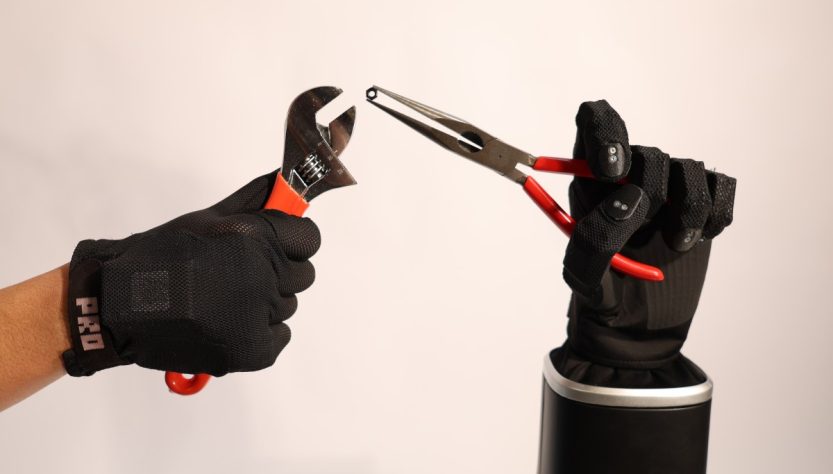
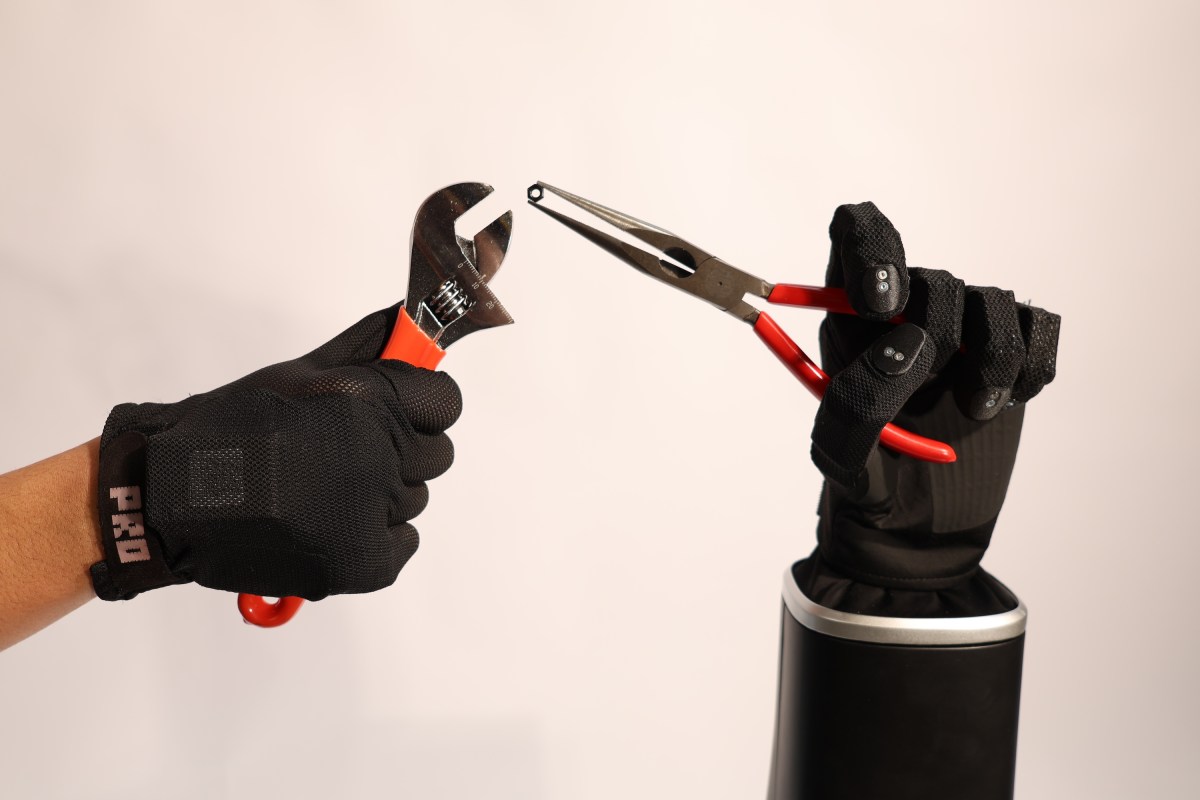
Proception’s answer is a glove outfitted with sensors. With human testers equipped with these gloves (and a headset), Proception and its clients can gather “human hand interaction data without necessitating a robot in the loop,” as stated in Proception’s press release.

This same glove is used on the robotic hand Proception is designing, serving as its sensor-laden “skin.” The hand boasts 22 degrees of freedom and multiple joints per finger, allowing it a “broad range of dexterous movements,” as per Proception.

Li noted that this method would enable Proception and its clients to collect more precise, task-specific data to enhance the resemblance of robotic hands to human ones. He further believes it is more conducive to scaling up.

“You require both hardware and data, and these must work in tandem to achieve [dextrous manipulation]. Many companies concentrate solely on hardware or on hardware along with non-scalable data [collection],” he explained. “We focus on this highly dexterous hardware in conjunction with highly scalable data. We believe this is a crucial combination to solve this challenge.”

First Round partner Bill Trenchard, who spearheaded the investment in Proception, emphasized that this was a significant factor in his decision to support Li.

“We believe they will offer the best hand on the market, possibly the most advanced hand available today, supported by the underlying data and models,” he conveyed to TechCrunch. “Dexterous manipulation is an extremely important aspect of the overall humanoid narrative moving forward, and as many individuals have noted, it represents the last crucial step in making these robots genuinely effective.”

Trenchard also commended Li’s ability to maintain composure amidst the lawsuit from his former employer.

“He was very transparent with us regarding this situation, and I believe the team did an outstanding job of maintaining focus,” Trenchard remarked. “Jay is a remarkable leader.”

Li is also assured. After navigating Tesla’s “intense legal department,” he shared with TechCrunch that he wouldn’t be astonished if the company seeks assistance as Proception progresses.

“I believe it will come to pass,” he stated.

When you purchase through links in our articles, we may earn a small commission. This doesn’t affect our editorial independence.

Pocket secures $11M in wager on increasing appetite for AI note-taking gadgets

Pocket secures $11M in wager on increasing appetite for AI note-taking gadgets

In contrast to AI devices like Rabbit or Humane, firms that focus on creating specialized gadgets for recording and transcribing meetings have gained noticeable traction. The potential market is vast — although somewhat limited, as smartphones adequately handle these tasks when used with note-taking applications — and startups such as Plaud, Mobvoi, Anker, Viaim, and Vibe have jumped in to capitalize on this opportunity.

Amidst this competitive landscape, Y Combinator-supported Pocket believes it can stand out through its design, packaging, and pricing strategy. The company offers a $129 credit card-sized puck that adheres to the back of your phone, promising limitless recordings, transcriptions, and to-do items, all without a subscription.

The startup claims it has sold over 130,000 units since its launch last year, with this momentum now allowing it to secure $11 million in funding from Accel, Y Combinator, and ElevenLabs CEO and co-founder Mati Staniszewski.

The foundational concept behind Pocket isn’t original: You attach the puck to your phone’s back, initiate recording during a meeting, and it will capture and transcribe your discussions.

Image Credits:Pocket

Users are then able to instruct the related phone application to produce summaries of meetings, pose questions to an AI assistant concerning the discussions, create mind maps, and convert the text into various templates.

While the basic transcription service is complimentary with the puck, the company also offers a $200-per-year subscription that unlocks unlimited AI-generated summaries, inquiries to the AI assistant, daily highlights, and file attachments.

“You can record while on the move, offline, and in the field, which is precisely how lawyers, sales personnel, doctors, real estate agents, construction workers, and students utilize Pocket today,” said Accel partner Cecilia Wang. “People are engaged rather than distracted by taking notes, and consequently, more data and insights are captured than ever before, which would otherwise have been overlooked. Over time, this accumulation of insights is incredibly valuable: a single central repository where your ideas, discussions, and reflections reside, as opposed to being disorganized and lost,” Wang added.

Pocket was established by Akshay Narisetti, a founding figure of the competing note-taking startup Omi; and Gabriel Dymowski, who previously launched a blockchain-focused document management initiative.

Pocket co-founders Akshay Narisetti and Gabriel Dymowski Image Credits:Pocket

“We believed that all meeting notetakers were designed for virtual interactions, but none were tailored for in-person discussions. AI requires substantial context to function optimally for us, and much of that context is present offline,” Narisetti shared with TechCrunch.

For its business clients, Pocket delivers custom workflow management, webhook support, and compatibility with applications like Google Calendar, OneDrive, Google Drive, Obsidian, Claude, and Cursor. Additionally, there exists a model context protocol (MCP) server to link its AI assistant to other databases.

Similar to other meeting notetakers, Pocket aims to assist users in automating tasks such as composing emails, updating customer relationship management systems, and generating action items after meetings. The company is focused on quickly deploying software to facilitate these integrations.

Devices like Pocket undeniably encounter competition from software solutions such as Granola, Zoom, Fireflies, Otter, and Read AI. However, device-first companies like Plaud, which is projected to reach an annual revenue of $100 million through software sales, are also developing enterprise capabilities alongside desktop applications for online meetings.

When you purchase through links in our articles, we may earn a small commission. This doesn’t affect our editorial independence.