
The Most Comprehensive Image of the Milky Way's Core to Date

The Most Comprehensive Image of the Milky Way’s Core to Date

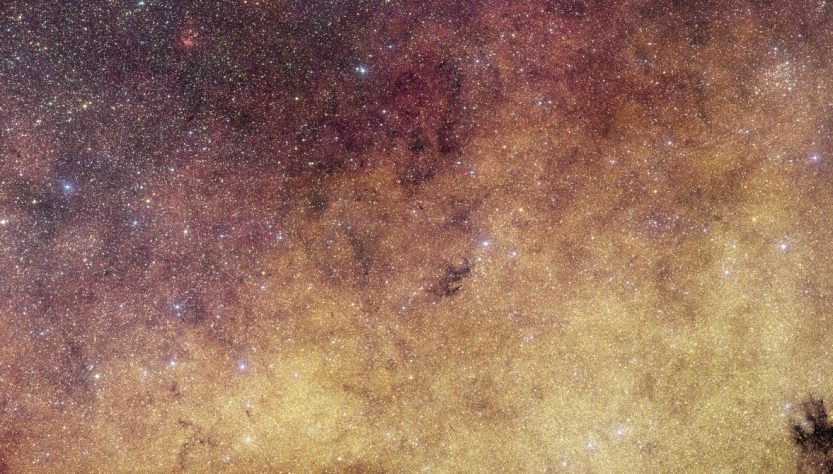
The European Space Agency’s (ESA) Euclid space telescope has captured the most extensive and intricate visible-light image of the Milky Way’s galactic bulge, the core region of our galaxy. This image is a composite of over 60 million stars, along with nebulae and star clusters, assisting scientists in verifying exoplanets and measuring their masses with enhanced accuracy. Although Euclid was designed for studying distant galaxies, its camera manages to image the Milky Way’s luminous, dense core, achieved in just 26 hours on March 23, 2025. The mosaic, created from nine exposures, encompasses an area larger than that of the full moon, with Euclid’s imaging area being 270 times that of Hubble’s field of view and significantly quicker—Keck Observatory would need roughly 2,000 hours for the same coverage. This latest image of the Milky Way in a star-laden region is perfect for exoplanet investigation through microlensing. Jean-Philippe Beaulieu remarked that almost 300 exoplanets have been identified using this method over two decades; the Euclid image features 51 known planetary systems and is expected to aid in discovering many more. Although Euclid’s brief observation period couldn’t identify new microlensing occurrences, it remains beneficial for assessing known planetary masses. Natalia Rektsini emphasized that Euclid supplies the essential historical data for upcoming microlensing occurrences that the Roman space telescope will observe. Euclid’s findings will serve as a benchmark for future missions, enabling comprehensive studies and accurate mass assessments of exoplanets. Valeria Pettorino pointed out that Euclid’s distinct data regarding the Milky Way’s center, offering a wide and clear perspective, also serves purposes for examining brown dwarfs, binary stars, stellar movements, and dust in our galaxy. This article, originally from WIRED Italia, was translated from Italian.
Observing the Colossal Asteroid Approaching Earth This Weekend

Observing the Colossal Asteroid Approaching Earth This Weekend

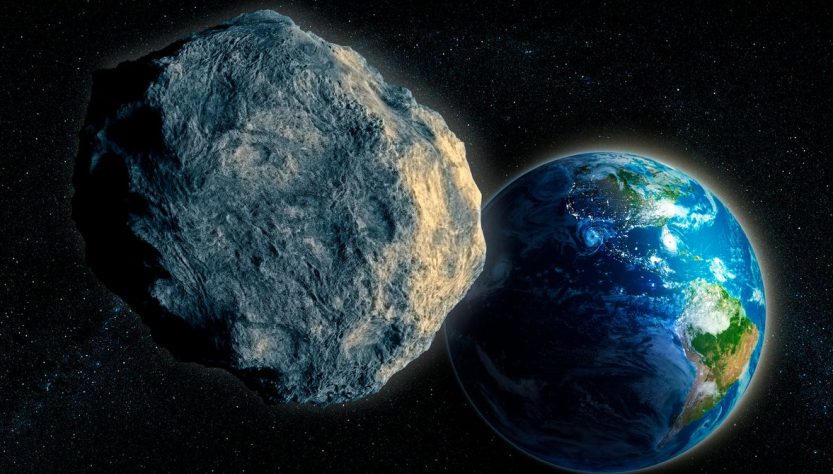
The European Space Agency (ESA) revealed that asteroid (152637) 1997 NC1 will approach Earth at its nearest point in 400 years this weekend. While there is no risk of it hitting Earth, it can be viewed through commercial telescopes and astronomical binoculars globally.

On Saturday, June 27, the asteroid will come within 2.56 million kilometers (1.59 million miles) of Earth—6.6 times the distance between Earth and the moon. Its size is estimated to range from 700 meters to 1.6 kilometers in diameter. It will not approach this closely again until 2133, according to the ESA.

The closest encounter will occur on June 27 at 11:14 UTC. Viewing times depend on the region:

– Europe: Night of June 26-27, particularly early morning
– Mexico: Night of June 26-27
– US: Night of June 26-27, prime before sunrise
– Argentina and Southern Cone: Night of June 27-28, as it moves south

The asteroid will be observable for several days afterward, although its luminosity will decrease and its position will shift. Chances to view it extend for a few days following the approach but become less favorable in the northern hemisphere.

Even though it is larger than a skyscraper, the asteroid will not be visible without assistance. It will exhibit a brightness comparable to Neptune, about magnitude 10, according to the ESA.

Through a telescope or binoculars, the asteroid will show as a small light point moving at 40 arc seconds per minute against the backdrop of stars—easy to detect movement over a few minutes.

Your eyesight alone will not suffice, as the asteroid’s dimness exceeds naked-eye visibility by 40 times, and the brightness of the moon reduces sky contrast.

As it approaches closest, the asteroid will be positioned in the constellations Ophiuchus and Serpens Cauda, below the star Vega. Astronomy applications such as Stellarium and SkySafari can assist in finding it by searching for “1997 NC1.”

Astronomers recommend using a commercial telescope with at least a 100mm aperture, though models in the 150 to 200mm range offer improved viewing. It is also visible with 15 x 70 or 20 x 80 binoculars mounted on a tripod, away from light pollution.

For those who cannot observe in person, the Virtual Telescope Project will broadcast the event on June 26 and 27.

Originally published on WIRED en Español, translated from Spanish.