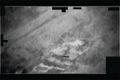
Pentagon Releases Fresh Set of Declassified UFO Files

Pentagon Releases Fresh Set of Declassified UFO Files

Trump initially suggested the release in February through a post on Truth Social. The Pentagon, in conjunction with the White House, Director of National Intelligence Tulsi Gabbard, the Energy Department, NASA, and the FBI, orchestrated the release. Numerous files in this fresh batch are already accessible to the public. Nevertheless, some iterations of these known documents feature more pages or fewer redactions compared to previous releases.

More than 60 percent of Americans think the government is concealing UAP information, as reported by YouGov, while 40 percent believe UAP might have extraterrestrial origins, according to Gallup. Congress has conducted hearings on a potential decades-long initiative to recover “non-human” technologies, but tangible evidence remains limited.

Adam Frank, an astrophysicist at the University of Rochester, shared his thoughts on the new files: “If it’s merely more ambiguous photos or heavily censored documents, it’s the same old narrative. We require genuine scientific outcomes from investigations if the extraordinary assertions hold true.”

The document release comes after a significant week of discussions about aliens, including Stephen Colbert’s interview with former President Barack Obama, where Obama humorously remarked on the improbability of government cover-ups, stating, “some guy guarding the installation would have captured a selfie with the alien and shared it with his girlfriend.”

Crew members of Artemis II also interrogated the notion of an extensive government conspiracy surrounding extraterrestrial findings in a conversation with The Daily. Reid Weisman, the commander of Artemis II, remarked, “If we discovered alien life and communicated it, NASA would never encounter a budget issue again. So believe me.” Victor Glover, the pilot of the mission, added, “Why would we conceal that from you?”

Judge Stops Anthropic Supply-Chain Hazard Classification

Judge Stops Anthropic Supply-Chain Hazard Classification

A temporary injunction was issued in favor of Anthropic, barring the US Department of Defense from labeling it as a supply-chain risk. This ruling by Rita Lin, a federal district judge in San Francisco, potentially enables clients to resume partnerships with Anthropic. It signifies a symbolic setback for the Pentagon while enhancing Anthropic’s efforts to preserve its business and public perception.

Judge Lin indicated that the “supply chain risk” label could be both legally baseless and arbitrary. The Department of Defense failed to provide sufficient justification for viewing Anthropic’s insistence on usage limitations as indicative of possible sabotage.

Neither the Department of Defense nor Anthropic immediately responded to the ruling.

Anthropic’s AI technologies have been employed by the Department of Defense for critical assignments, but lately, the Pentagon has begun to withdraw its usage, citing trust concerns stemming from Anthropic’s imposed usage limits. The Pentagon released mandates, including the supply-chain risk label, which adversely affected Anthropic’s operations and standing. Anthropic initiated legal actions, alleging that the sanctions were unconstitutional. Judge Lin remarked that the government seemed to be unlawfully obstructing Anthropic.

The ruling reinstates the situation to its condition on February 27, prior to the issuance of directives, enabling defendants to pursue lawful options available on that date. It does not require the Department of Defense to employ Anthropic’s technology but guarantees that any shift to alternative providers complies with regulations and laws.

While the ruling permits federal agencies to discontinue engagements with Anthropic, they cannot rely on the supply-chain-risk label for these decisions. The ruling will take effect in a week, with another federal appeals court decision forthcoming.

This ruling could allow Anthropic to reassure apprehensive customers of legal support in the future. The timeline for the final ruling remains to be determined.