

Judge Stops Anthropic Supply-Chain Hazard Classification

Judge Stops Anthropic Supply-Chain Hazard Classification

A temporary injunction was issued in favor of Anthropic, barring the US Department of Defense from labeling it as a supply-chain risk. This ruling by Rita Lin, a federal district judge in San Francisco, potentially enables clients to resume partnerships with Anthropic. It signifies a symbolic setback for the Pentagon while enhancing Anthropic’s efforts to preserve its business and public perception.

Judge Lin indicated that the “supply chain risk” label could be both legally baseless and arbitrary. The Department of Defense failed to provide sufficient justification for viewing Anthropic’s insistence on usage limitations as indicative of possible sabotage.

Neither the Department of Defense nor Anthropic immediately responded to the ruling.

Anthropic’s AI technologies have been employed by the Department of Defense for critical assignments, but lately, the Pentagon has begun to withdraw its usage, citing trust concerns stemming from Anthropic’s imposed usage limits. The Pentagon released mandates, including the supply-chain risk label, which adversely affected Anthropic’s operations and standing. Anthropic initiated legal actions, alleging that the sanctions were unconstitutional. Judge Lin remarked that the government seemed to be unlawfully obstructing Anthropic.

The ruling reinstates the situation to its condition on February 27, prior to the issuance of directives, enabling defendants to pursue lawful options available on that date. It does not require the Department of Defense to employ Anthropic’s technology but guarantees that any shift to alternative providers complies with regulations and laws.

While the ruling permits federal agencies to discontinue engagements with Anthropic, they cannot rely on the supply-chain-risk label for these decisions. The ruling will take effect in a week, with another federal appeals court decision forthcoming.

This ruling could allow Anthropic to reassure apprehensive customers of legal support in the future. The timeline for the final ruling remains to be determined.
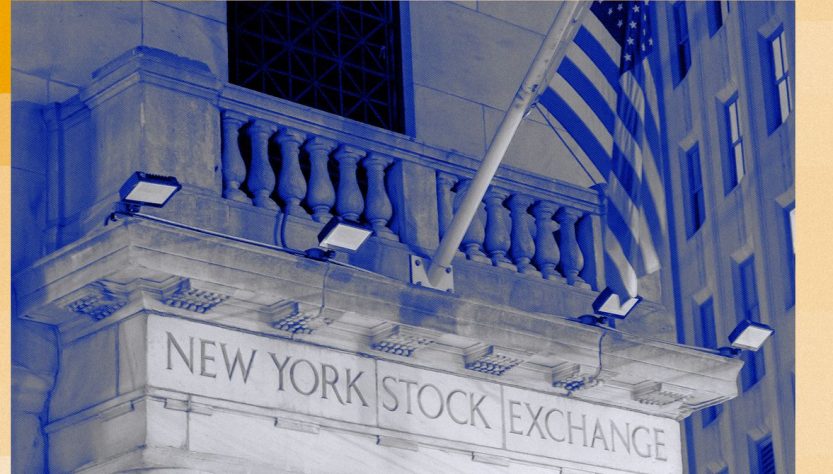
Wall Street Struggles with AI Hysteria

Wall Street Struggles with AI Hysteria

Before the prior week, very few were familiar with the name Alap Shah. The 45-year-old financial analyst and technology entrepreneur had been laboring quietly for two decades. Then, over the weekend, he co-authored a blog with the research company Citrini titled “The 2028 Global Intelligence Crisis.” It was a speculative article discussing the repercussions of artificial intelligence, predicting that by June in that year, AI would elevate unemployment beyond 10 percent and result in considerable market downturns. With a self-assured, prophetic style reminiscent of a Michael Lewis narrative, the authors depicted a negative feedback loop: AI agents displace jobs, consumer spending declines, and firms resort to perpetual layoffs.

Much of the content was familiar territory. Tech figures like Anthropic CEO Dario Amodei have already stated that half of the entry-level white-collar positions will disappear shortly, and Anthropic’s launch of new AI tools earlier this year brought about a sell-off on Wall Street. Nevertheless, the report made a substantial impact, coinciding with a significant drop in the Dow. Alap Shah’s name received unexpected notoriety.

Upon closer inspection, however, the reaction is not as remarkable. Similar to the general public, Wall Street is extremely worried about AI, with minor provocations causing considerable market fluctuations. Financial markets don’t always mirror reality, but these reactions highlight a broader anxiety. The AI future, reminiscent of a William Gibson concept, is unevenly distributed, leading to thrilling yet disconcerting developments.

No one completely grasps AI’s economic influence, but it is destined to be significant. Currently, stock values are elevated, encouraging market hopefulness. However, ominous reports or studies suggesting potential AI-induced disruptions remind investors of the unresolved and urgent issues at play. For example, earlier this month, a small company shifted from selling karaoke machines to AI logistics and released a report on enhancing truck loading efficiency, resulting in major losses in key logistics stocks, none of which had any prior connections to karaoke.

Following its effect on Wall Street, the Citrini report faced considerable backlash. Critics quickly pointed out its flaws. Some contended that AI has not yet had a meaningful effect on the economy. Others referenced historical resilience after technological advancements. A satirical response from Citadel Securities dismissed the report’s conclusions by outlining improbable conditions under which AI could instigate a lasting economic shock.

The most intense criticisms targeted the report’s claim that much of the economy is composed of unproductive middlemen and market makers exploiting public complacency. Shah argued that AI agents will enable consumers to effortlessly find the best deals, rendering apps unnecessary. He pointed out that DoorDash represents this transformation; consumers could circumvent apps, employing AI agents to directly arrange meals from restaurants and delivery services, resulting in a seamless experience. The implication is that companies like DoorDash are essentially comparable to outdated trends.