Iranians Do Not Have Missile Alert System, Thus Volunteers Develop Their Own Warning Map

Iranians Do Not Have Missile Alert System, Thus Volunteers Develop Their Own Warning Map

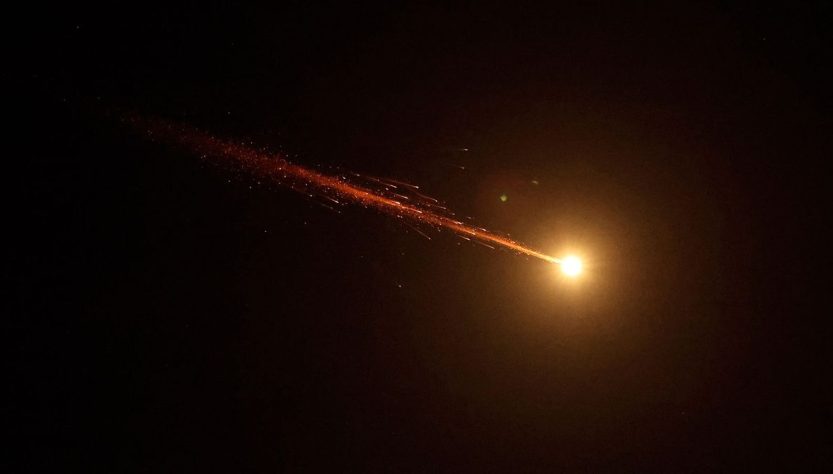
Since the beginning of Donald Trump’s confrontation with Iran more than three weeks ago, U.S. military forces have allegedly targeted upwards of 9,000 locations, creating an atmosphere of fear and uncertainty among Iranians in Tehran and across the country. With no governmental warning system in place and amidst Iran’s longest internet blackout, Iranians are confronted with a lack of information.

Even before the airstrikes by Israel and the U.S., the lack of a public emergency alert system and strict state-controlled digital censorship adversely affected millions. Following last year’s 12-day conflict between Israel and Iran, Iranian digital rights advocates launched ‘Mahsa Alert,’ an innovative platform that delivers push notifications regarding warnings of Israeli assaults, confirmed target areas, and offline mapping capabilities. While it does not serve as a substitute for a coordinated emergency service, this tool aids citizens in critical moments.

“There is no emergency alert system in Iran,” asserts Ahmad Ahmadian, CEO of Holistic Resilience, the U.S.-based organization supporting Mahsa Alert. Established last summer, the platform addresses a vital need by charting Iran’s landscape of repression and surveillance. Lightweight applications for Android and iOS have been developed for offline functionality, essential due to Iran’s internet restrictions. Updates are minimal; a recent one was only 60 kilobytes.

Mahsa Alert features overlays of verified “confirmed attacks” through videos or images provided via a Telegram bot or social networks. Alerts regarding evacuation zones, “danger areas,” and potential hazards to nuclear or military sites keep the public informed. Ahmadian notes that most confirmed attacks correspond with pre-identified map locations.

The platform also catalogs CCTV, government checkpoints, medical facilities, religious locations, protest sites, and more. Mahsa Alert’s visibility internationally has increased on social media, encouraging users to disseminate its findings, resulting in over 100,000 daily active users in a brief period. Roughly 335,000 individuals have utilized it this year, with 28% reportedly from within Iran, particularly during January’s crackdown on demonstrators.
How 'Handala' Emerged as the Symbol of Iran's Cyber Counteractions

How ‘Handala’ Emerged as the Symbol of Iran’s Cyber Counteractions

In the wake of the extensive airstrike operations conducted by the United States and Israel over Iran in late February, the cybersecurity sector anticipated retaliatory cyber offensives targeting Western entities. Tuesday night saw such an incident unfold in the US: a data breach at the medical technology company Stryker, believed to have ties to Iran, disabled tens of thousands of computers and disrupted global operations. The Iranian hacking collective Handala took responsibility for the breach.

A pronouncement on Handala’s website characterized the cyber operation as a reaction to the American Tomahawk missile assault that claimed the lives of 165 civilians at a girl’s educational institution in Iran and the ongoing hacking actions of the US and Israel. This pronouncement marks the beginning of a new phase in cyber warfare.

Once relatively unknown, Handala—named after a character created by Palestinian artist Naji al-Ali—is regarded by cybersecurity analysts, particularly in Israel, as a façade for Iran’s Ministry of Intelligence. Renowned for its data-deletion and hack-and-leak strategies, its targets have included the Albanian government and Israeli organizations.

In light of escalating existential threats, Iranian hackers, chiefly Handala, are encouraged to use every intended tool and network access against the US and Israel, stated Sergey Shykevich from the cybersecurity firm Check Point. Shykevich identifies Handala as the most active and prominent group in this vengeful campaign.

While hacking collectives often inflate their achievements, Handala has claimed numerous victims, predominantly in Israel, throughout the recent hostilities. Merging chaotic hacktivist tactics with governmental capabilities, the group acts as a primary cyber-retaliation entity for Iran, according to Justin Moore from Palo Alto Networks’ Unit 42.

Despite the chaos it generates, Handala’s operational coherence is doubtful, according to Rafe Pilling from Sophos’ X-Ops team. The group attempts swift access and infliction of damage in reaction to airstrikes that reportedly impact Iran’s cyber capabilities. Currently, Handala seems to be exploiting any available opportunity without an evident strategic framework.

When the Internet Breaks Down, Reality Vanishes

When the Internet Breaks Down, Reality Vanishes

Alaqad asserts that the loss of on-the-ground journalists equates to a loss of vital truths, as mainstream media outlets dictate the storyline. “Voices that are silenced and censored prevent us from fully grasping events,” she remarks.

During crises, disrupted communication leads to a lack of accountability and overlooked injustices. “Injustice shouts,” Alaqad claims, “while justice must be even louder.”

Journalists encounter ongoing suppression. In December 2025, Reporters Without Borders highlighted the deaths of 67 journalists that year, with 43 percent occurring in Gaza at the hands of Israeli forces. Since October 7, 2023, RSF reports over 220 fatalities among journalists in Gaza, whereas the UN reports a figure exceeding 260.

Dagher points out that the media blackout is part of a comprehensive tactic that includes limited movement and communication. Israel refutes the claim of targeting journalists.

“Murders of journalists stifle the truth,” Alaqad states. This leads to several consequences—diminishing on-ground reports and portraying journalists as dangers. “Such a message discourages individuals from interacting with journalists,” she observes.

Her protective press gear signaled her as a target, causing her mother to worry about her safety. Initial warm greetings and hospitality shifted to caution upon witnessing the targeting of journalists, Alaqad reflects.

Operating in Gaza involved navigating unpredictable conditions. Plans seldom extended beyond daylight hours, and circumstances rapidly evolved. “Uncertainty is the sole certainty,” Alaqad notes.

She frequently discovered that those she interviewed were subsequently killed in airstrikes. Now residing in Beirut, she studies media at the American University, backed by the Shireen Abu Akleh scholarship, named in honor of a journalist who lost her life due to Israeli forces.

Her widespread social media presence unveiled the truth of Gaza, yet also put her life at risk. While digital reporting reaches a broad audience, its permanence remains unstable, as accounts and content can vanish in an instant.