
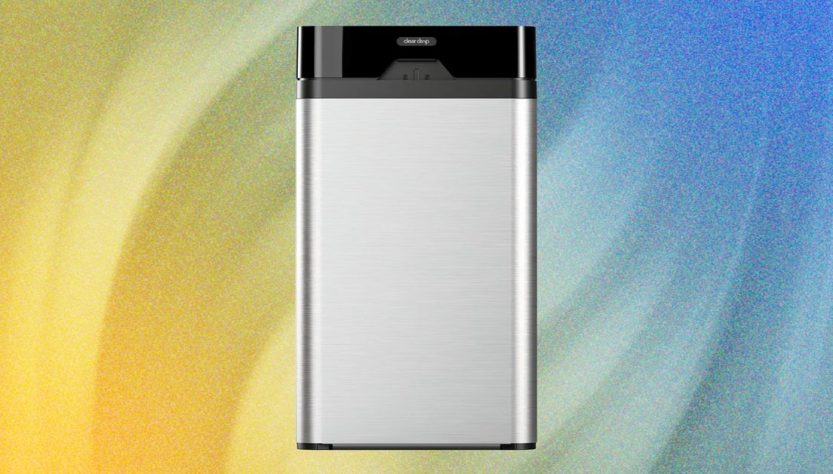
Soft plastics pose a significant challenge for sorting machines, interfere with processing lines, and harm the environment. They are typically excluded from curbside recycling initiatives. While there are facilities that recycle these types of plastics, achieving clean, contaminant-free waste is challenging, often leading to the majority of soft plastics ending up in landfills. The SPC, a “pre-recycling device” developed by Arbouzov, aims to facilitate this process by providing contained and traceable plastic that has a higher likelihood of being recycled.
I was curious about converting these blocks into products like patio furniture, which became evident when Arbouzov shared a video from a facility in Frankfort, Indiana, dedicated to processing these plastics. The blocks are shredded into small pieces, then pressed into decking, chairs, and more.
“The timeframe from sending a block to its arrival in recycling takes several weeks,” Arbouzov mentioned. At present, Frankfort is the sole processing site, but Arbouzov intends to move processing operations nearer to material generation to lessen logistics dependency, utilizing the postal system as a temporary solution.
Recycling, Rewired
My family of three generated a block every two weeks, exceeding the supply of mailers, leading to a buildup of blocks. I hoped the SPC would create consumer-ready products like spoons or 3D printing filament, but a 2023 Greenpeace report pointed out that recycling plastics could heighten their toxicity, as the heating process might release or create dangerous chemicals. I wondered if recycled plastic fits into a circular economy and sought Arbouzov’s insight.