Wager on Wildfire Hazards: Forecast Markets and the Security of Your Community

Wager on Wildfire Hazards: Forecast Markets and the Security of Your Community

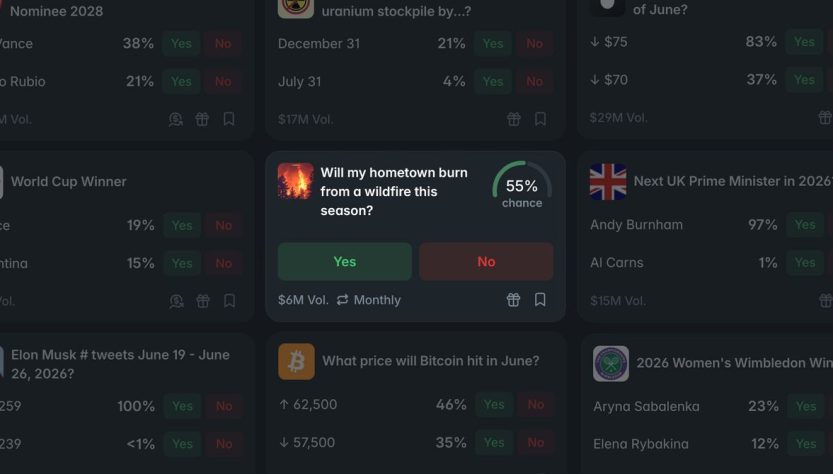
Sylvie Andrews and her spouse lost their recently constructed home and ten years of hard work when the Eaton Fire swept through Altadena, California, in January 2025, along with the community they had built. “We invested a tremendous amount of effort into it,” Andrews revealed. “That’s what we lost in the blaze.” The Eaton and Palisades Fires obliterated more than 16,000 structures and resulted in 31 fatalities. While Andrews and others evacuated, some viewed it as an investment opportunity, wagering on the fires via Polymarket, the leading prediction market platform. Participants placed bets on the fires’ spread, duration, and devastation.

Prediction markets operate like gambling establishments for differing event results. From elections to sports to climate, anything can be wagered upon. Markets frame inquiries in a “yes” or “no” format, with prices fluctuating between $0 and $1. A price of 50 cents on a “yes” contract indicates a 50% probability of the event happening according to bettors. Market operators earn revenue by imposing fees on bets.

In January 2025, Polymarket featured nearly 20 wildfire-related questions for Southern California, established by the platform’s “markets team.” Inquiries covered the acreage the Palisades Fire would consume, whether it would reach Santa Monica, its level of containment, and if all fires would be under control by the beginning of February. Individuals wagered $1.2 million on these propositions, as reported by Aeon Magazine. “Wow,” Andrews repeatedly said upon discovering the sum. “It’s morally outrageous,” she remarked. “The notion that anyone could feel comfortable doing that astonishes me.”

Susan Sherman from Pacific Palisades, who lost her familial home in the Palisades Fire, commented, “The prediction markets are simply the wild, wild West,” describing the betting as “extremely crude and unfeeling.” As prediction markets expand with a new wildfire season, survivors and ethicists contend that betting fosters cold-hearted reasoning and reckless behavior. A key worry is arson fueled by these markets. Sherman voiced her concerns about this, emphasizing how easily someone could exploit fire for personal gain.

Systems profiting from wildfire outcomes may inadvertently promote misconduct like arson, which is contrary to the US Forest Service’s mission, as stated by their spokesperson. Ann Skeet from the Markkula Center for Applied Ethics cautioned about unscrupulous individuals leveraging such markets to provoke harmful actions, labeling such a market as perilous. Firefighters or land managers possessing unique fire insights might feel tempted to wager, creating concerns surrounding insider trading.

Necessary Equipment for a Crisis Kit—for Vehicles or Grab Bags

Necessary Equipment for a Crisis Kit—for Vehicles or Grab Bags

You never know when a sudden evacuation may be required. The current political landscape is erratic, and calamities don’t follow a timetable; stores frequently close during occurrences like wildfires or civil unrest. By the start of 2026, the Western United States could experience heightened wildfire threats due to unprecedentedly low snowpack levels, contributing to diminished water availability in spring and summer.

Authorities advise assembling an emergency kit ahead of time to guarantee your family’s security during hurricanes, floods, earthquakes, blizzards, wildfires, or man-made disasters.

Nevertheless, not every disaster is the same. Jonathan Sury from Columbia University’s National Center for Disaster Preparedness highlights two main scenarios for which families ought to prepare.

At times, a rapid exit with a go bag equipped with essentials like a three-day water reserve, purification tablets or water filters, a quality flashlight, and batteries is crucial, especially during an imminent wildfire. In other situations, such as snowstorms, it may be necessary to remain indoors without water or electricity, hence the need for power banks. Long-term planning is also important for regional wildfires, considering smoke and possible power outages.

“Consider the likelihood of power failures,” stated National Weather Service preparedness lead Charlie Woodrum. “Power may be out for multiple days or an entire week, and water could be limited.” He made these remarks in January, foreseeing a historic winter storm season throughout the United States, which could apply to disasters like earthquakes or fires.

Here’s a guide on how to prepare for a short-term crisis and what supplies to gather. This is not a manual for civil conflict or the end of the world but rather guidance for safely navigating natural disasters such as storms, floods, earthquakes, and wildfires, as well as failures in water or power systems.

Heed the insights from colleague Adrienne So on the significance of connecting with your neighbors for emergency readiness, and WIRED’s Guide to Surviving Extreme Weather, along with its recommendations for sourcing reliable emergency information amidst decreasing federal assistance. Worried about job security? Review WIRED’s guide to a digital go bag for unforeseen employment disruptions.

Update April 2026: I have included tips from University of Oregon wildfire authorities Heidi Huber-Stearns and Amanda Stasiew.

Eco Experiment: Assessment of Clear Drop Soft Plastic Compactor

Eco Experiment: Assessment of Clear Drop Soft Plastic Compactor

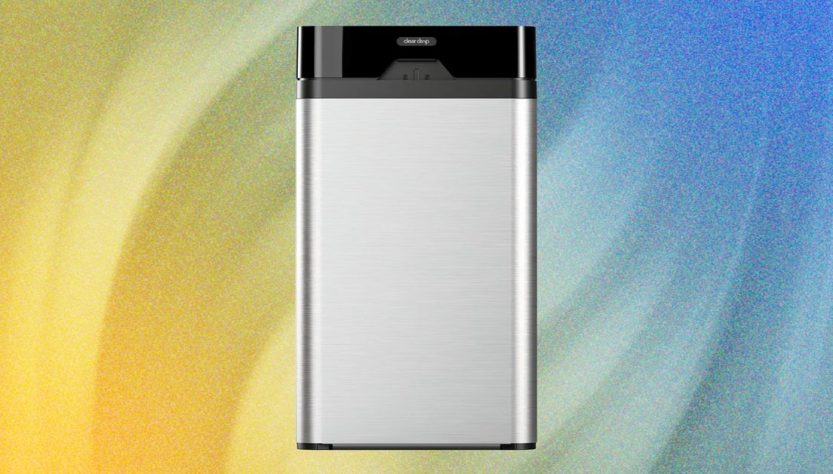
Soft plastics pose a significant challenge for sorting machines, interfere with processing lines, and harm the environment. They are typically excluded from curbside recycling initiatives. While there are facilities that recycle these types of plastics, achieving clean, contaminant-free waste is challenging, often leading to the majority of soft plastics ending up in landfills. The SPC, a “pre-recycling device” developed by Arbouzov, aims to facilitate this process by providing contained and traceable plastic that has a higher likelihood of being recycled.

I was curious about converting these blocks into products like patio furniture, which became evident when Arbouzov shared a video from a facility in Frankfort, Indiana, dedicated to processing these plastics. The blocks are shredded into small pieces, then pressed into decking, chairs, and more.

“The timeframe from sending a block to its arrival in recycling takes several weeks,” Arbouzov mentioned. At present, Frankfort is the sole processing site, but Arbouzov intends to move processing operations nearer to material generation to lessen logistics dependency, utilizing the postal system as a temporary solution.

Recycling, Rewired

My family of three generated a block every two weeks, exceeding the supply of mailers, leading to a buildup of blocks. I hoped the SPC would create consumer-ready products like spoons or 3D printing filament, but a 2023 Greenpeace report pointed out that recycling plastics could heighten their toxicity, as the heating process might release or create dangerous chemicals. I wondered if recycled plastic fits into a circular economy and sought Arbouzov’s insight.

The US Saw a Notable Increase in Battery Demand Last Year

The US Saw a Notable Increase in Battery Demand Last Year

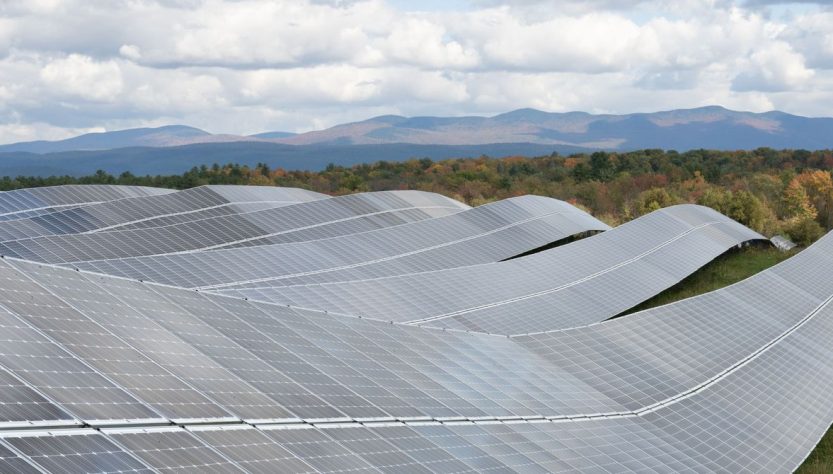
In 2025, the United States saw a historic rise in energy storage, as detailed in a freshly released solar industry report on Monday. This boom in battery storage signifies a considerable milestone for clean energy amid the renewable-unfriendly second term of the Trump administration and suggests that utilities may be modifying electric grids to meet increasing demand across the country.

The report, issued by the Solar Energy Industries Association (SEIA), corresponds with recent findings from Bloomberg New Energy Finance, showcasing a comparable surge in battery development. As per SEIA, the United States added 57 gigawatt hours of new energy storage in 2025, representing nearly a 30 percent rise from the prior year. This capacity is enough to supply power to over five million homes each year.

The report predicts a 21 percent market growth by the conclusion of this year, with an additional 70 gigawatt hours anticipated in 2026. These statistics sharply contrast with less than a decade ago when storage on the grid amounted to only around half a gigawatt.

Batteries have demonstrated considerable political endurance. Tax incentives for wind and solar were cut last summer amid legislative challenges to renewables, yet faced opposition from Republican lawmakers in regions with clean energy initiatives. Nonetheless, battery tax credits largely remained unharmed.

In spite of the federal administration’s position on renewables, batteries and solar experienced considerable advancement in certain conservative states last year. Texas stands out, where solar energy constituted over 15 percent of summer demand, exceeding coal for the first time. SEIA projects that Texas will outpace California this year in terms of gigawatt hours of storage deployed.

Jigar Shah, from the advisory firm Multiplier and a former director of the Department of Energy’s Loan Programs Office, points out that Texas’s independent and deregulated power grid favors solar and batteries over alternative solutions, notwithstanding White House opposition. Recent surveys reveal that MAGA voters back solar power, and prominent individuals like Katie Miller have voiced support for solar energy.

“Texas fundamentally ignores cultural prejudices,” Shah states. “‘Heed the market signals. Construct whatever you wish, whether it’s coal plants or batteries.’ Batteries received the most financial backing.”

While solar and batteries thrive in Texas, the majority of battery installations last year were standalone, not linked to particular solar projects, which is a positive trend for grids coping with heightened demand.

Generally, US energy grids utilize only about 50 percent of their available energy on a daily basis. This intentional underutilization guarantees capacity for peak demand days. Deploying batteries at all levels of the grid aids in harnessing surplus energy during off-peak hours to mitigate waste.