
Robotaxi Service Interruption Leaves Passengers Stuck on China's Roadways

Robotaxi Service Interruption Leaves Passengers Stuck on China’s Roadways

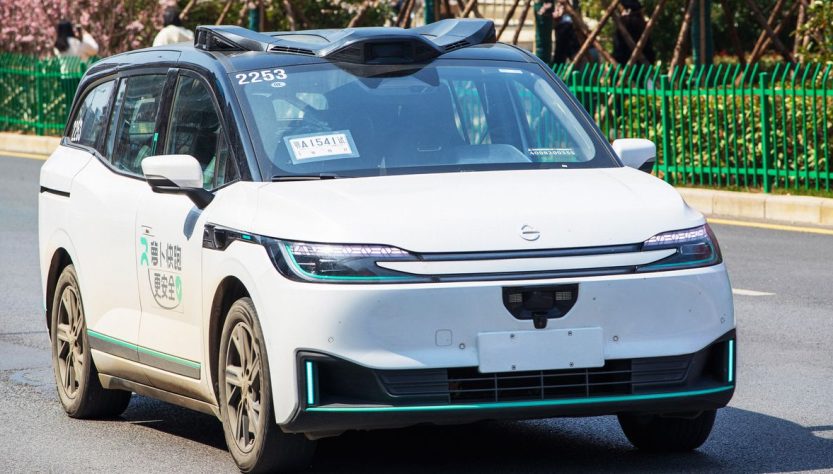
An unidentified technical issue led to several robotaxis operated by the Chinese technology company Baidu to become immobilized in traffic on Tuesday, leaving some passengers stranded for more than an hour. In Wuhan, where Baidu has rolled out many Apollo Go autonomous taxis, users on Chinese social media reported observing the vehicles malfunctioning and halting. Images and videos capture the stationary Baidu cars on congested roadways, frequently in the fast lane.

A university student in Wuhan mentioned being trapped with friends in a Baidu robotaxi for roughly 90 minutes. The vehicle malfunctioned and stopped several times before halting at an intersection. The screen in the car instructed passengers to stay seated and wait for a company representative, but after 30 minutes, they were unable to connect with customer support. After another hour of waiting, the passengers chose to exit the vehicle on their own.

Other riders also voiced their frustrations on social media regarding the inability to reach customer support. One user shared that she attempted all available help options on the app, but the phone line was inoperative, and the SOS button was not an option. She ultimately forced the door open and stepped out as traffic came to a standstill behind her robotaxi.

Baidu has yet to provide a statement. Police in Wuhan indicated that the problem might be linked to a system failure, though the situation is currently being investigated. No injuries have been reported, and it is said that passengers managed to leave the vehicles. The total number of affected robotaxis remains uncertain.

A dash cam recording depicts a vehicle going around 16 Apollo Go units that were parked on the road for over 90 minutes, with the driver narrowly avoiding them. In a separate event, a man alleged that he crashed into a halted Baidu vehicle after the car ahead of him swerved to dodge it. His orange SUV was documented with significant damage after being towed away.
A School District's Effort to Educate Waymos to Halt for School Buses Did Not Succeed

A School District’s Effort to Educate Waymos to Halt for School Buses Did Not Succeed

The claimed advantage of autonomous vehicle technology lies in the ability of each car to learn from the errors of others. As detailed on Waymo’s website: “The Waymo Driver benefits from the shared experiences collected across our fleet, including earlier hardware versions.”

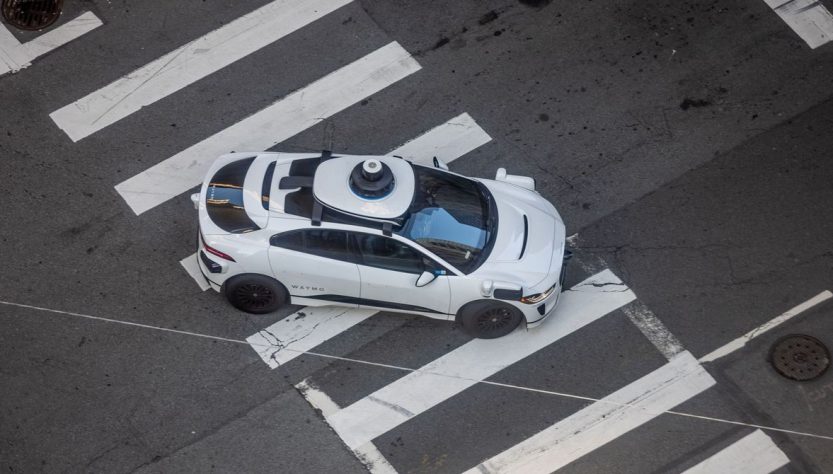
Nevertheless, in Austin, Waymo’s vehicles struggled for several months to appropriately stop for school buses while picking up and dropping off students. An official from the Austin Independent School District (AISD) asserted that in at least 19 instances, the vehicles “illegally and dangerously” bypassed the district’s school buses while red lights were flashing and stop arms were extended, failing to make complete stops as mandated by law.

In early December, Waymo even launched a federal recall concerning these incidents, acknowledging at least 12 of these to the National Highway Traffic Safety Administration (NHTSA), which oversees road safety. Federal paperwork indicates that the self-driving vehicle company’s engineers had “created software modifications to rectify the behavior” weeks earlier.

However, even after the recall, reports of school bus violations continued, as noted by school officials and a report from the National Transportation Safety Board (NTSB), an independent federal safety organization that is also looking into the issue.

Communications via email and text between school officials and Waymo, acquired by WIRED through a public records request, highlight the measures taken by the Austin public school district and Waymo to address the problem. AISD held a half-day “data collection” event in a school parking lot in mid-December, as the records indicate, where several staff members set up school buses and stop-arm signals for the self-driving company to collect data on the vehicles and their flashing lights.

By mid-January, one month later, the school district reported at least four additional instances of school buses being passed in Austin.