
WWDC 2026 is gearing up to be Apple’s most subdued keynote in years, and possibly its most significant. Here’s what we anticipate on June 8.
sparta
Apple might integrate Siri into a standalone application with a significant redesign.
Apple is experimenting with a new Siri application that resembles a chatbot in appearance and functionality, allowing users to handle discussions, upload documents, and toggle between voice and text all in one location.
Amazon introduces an adorable humanoid to its collection of robots
Amazon has purchased Fauna Robotics, headquartered in New York City, just a few months following the introduction of Sprout, an adorable humanoid robot. Specific information regarding the acquisition has not been disclosed, but Fauna’s CEO Rob Cochran expressed in a LinkedIn post on Tuesday that he was “extremely enthusiastic” about this news. “When we debuted in […]
ChatGPT is receiving a crucial enhancement for handling your files.
OpenAI is introducing a new Library tab and Recent files menu in ChatGPT, simplifying the process of locating, reusing, and managing files throughout conversations.

Iranians Do Not Have Missile Alert System, Thus Volunteers Develop Their Own Warning Map
Since the beginning of Donald Trump’s confrontation with Iran more than three weeks ago, U.S. military forces have allegedly targeted upwards of 9,000 locations, creating an atmosphere of fear and uncertainty among Iranians in Tehran and across the country. With no governmental warning system in place and amidst Iran’s longest internet blackout, Iranians are confronted with a lack of information.
Even before the airstrikes by Israel and the U.S., the lack of a public emergency alert system and strict state-controlled digital censorship adversely affected millions. Following last year’s 12-day conflict between Israel and Iran, Iranian digital rights advocates launched ‘Mahsa Alert,’ an innovative platform that delivers push notifications regarding warnings of Israeli assaults, confirmed target areas, and offline mapping capabilities. While it does not serve as a substitute for a coordinated emergency service, this tool aids citizens in critical moments.
“There is no emergency alert system in Iran,” asserts Ahmad Ahmadian, CEO of Holistic Resilience, the U.S.-based organization supporting Mahsa Alert. Established last summer, the platform addresses a vital need by charting Iran’s landscape of repression and surveillance. Lightweight applications for Android and iOS have been developed for offline functionality, essential due to Iran’s internet restrictions. Updates are minimal; a recent one was only 60 kilobytes.
Mahsa Alert features overlays of verified “confirmed attacks” through videos or images provided via a Telegram bot or social networks. Alerts regarding evacuation zones, “danger areas,” and potential hazards to nuclear or military sites keep the public informed. Ahmadian notes that most confirmed attacks correspond with pre-identified map locations.
The platform also catalogs CCTV, government checkpoints, medical facilities, religious locations, protest sites, and more. Mahsa Alert’s visibility internationally has increased on social media, encouraging users to disseminate its findings, resulting in over 100,000 daily active users in a brief period. Roughly 335,000 individuals have utilized it this year, with 28% reportedly from within Iran, particularly during January’s crackdown on demonstrators.
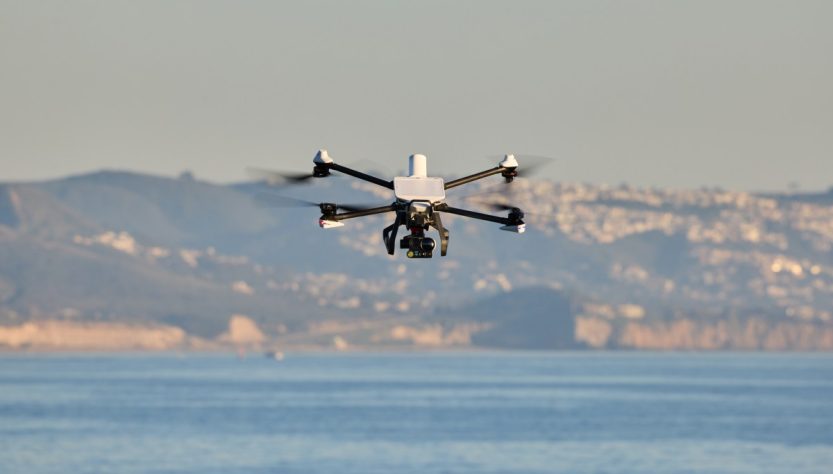
A startup from a former Thiel fellow has just unveiled a drone that claims to be able to substitute police helicopters.
As I converse with Blake Resnick, he navigates his drone startup’s latest office in Seattle—a spacious 50,000-square-foot facility that Resnick anticipates won’t be completely operational until later this year—possibly November. Nevertheless, the large (and currently somewhat vacant) space signifies the potential of a rapidly expanding company focused on dominating its specific sector.
The sector in focus is public safety and the startup at hand is Brinc, which markets drones to law enforcement and public agencies throughout the U.S. The company aims to be the “DJI of the West,” as Resnick describes it—a reference to the Chinese drone producer and an indication that Resnick aspires for Brinc to be equally associated with the technology it provides.
A former Thiel Fellow—a prestigious initiative that supports young entrepreneurs in bypassing or delaying college—Resnick established Brinc in 2017 and soon after attracted interest from then-OpenAI founder Sam Altman, who eventually became one of Brinc’s initial seed investors. Since that time, Brinc has participated in several funding rounds and, according to Resnick, was valued at nearly half a billion dollars during its latest round.
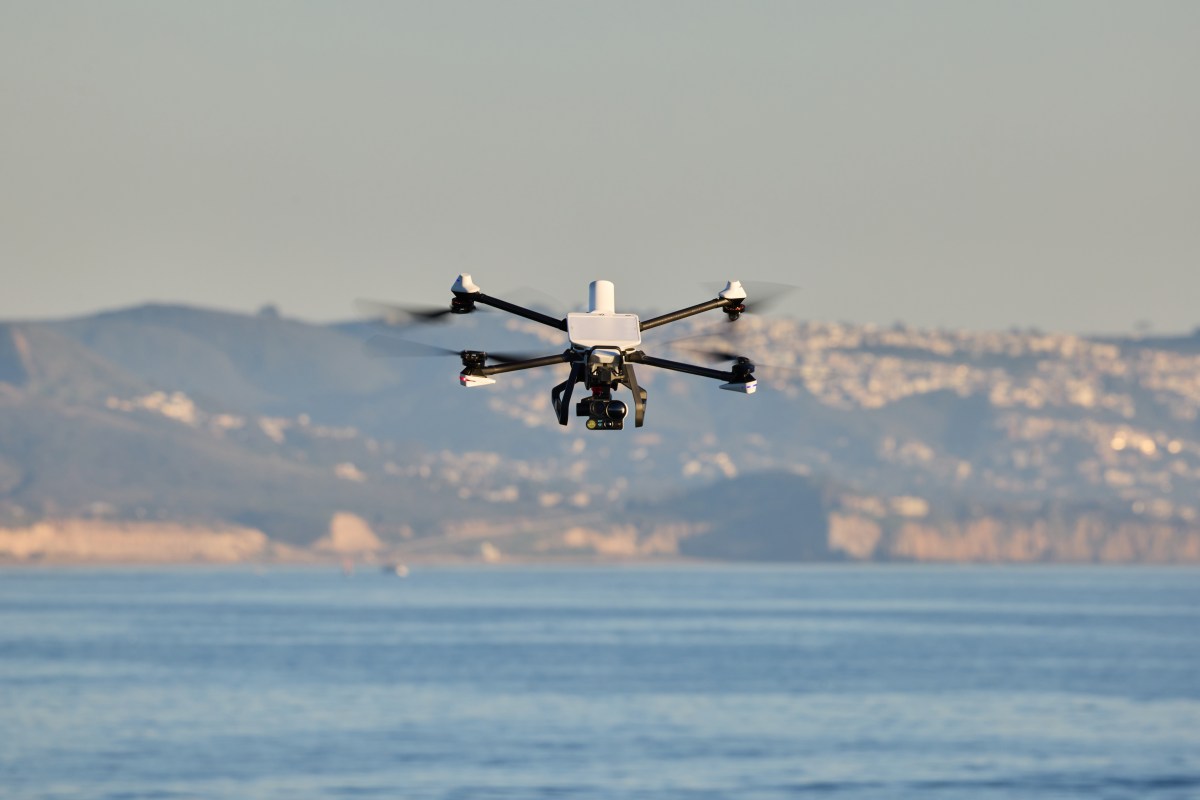
On Tuesday, Brinc introduced its latest creation, a public safety drone named Guardian that Resnick claims is “the closest thing to a police helicopter replacement that the drone industry has ever produced.” Brinc asserts it is the world’s “most capable 9-11 response drone” to date.
Guardian certainly boasts impressive specifications and features. The drone can achieve speeds of up to 60 mph and offers a flight duration of 62 minutes, according to its developer. It is also equipped with thermal imaging cameras and two additional 4K cameras—all featuring zoom functions. “Even from a considerable height, a police department could capture details like license plate information,” Resnick shares. Moreover, it is fitted with a spotlight and a loudspeaker that surpasses the volume of a police siren.
The drone’s landing station, which Brinc refers to as a “charging nest,” enables fully automated battery replacement and can be stocked with essential safety equipment such as defibrillators, flotation devices, and Narcan, all without human assistance.
Guardian also includes a Starlink panel integrated directly into its structure, marking it, as per Brinc, the first public safety drone with such a feature. Starlink, SpaceX’s satellite internet service, provides the drone with connectivity anywhere in the world. “Starlink has never been incorporated into a commercially available quadcopter before, so [it] grants this airframe limitless range globally,” Resnick explains.
Techcrunch event
San Francisco, CA
|
October 13-15, 2026
Resnick evidently identifies public safety as a significant opportunity. “There are approximately 20,000 police departments in the United States, 30,000 fire departments, and 80,000 police and fire stations—and we believe the top half of that market will likely have a 911 response drone stationed in a recharging nest on the roof in the future,” he states. “It indeed seems like we are looking at a $6 billion to $8 billion market opportunity,” he adds, evaluating markets in both the U.S. and globally.
In this vein, Brinc recently collaborated with the National League of Cities on an initiative to expand “drone as first responder” programs in communities nationwide—a strategy that will undoubtedly help cultivate relationships between the startup and potential customer communities.
Moreover, Resnick believes that recent geopolitical shifts have benefitted his company. Until recently, DJI maintained an unofficial monopoly over the global drone market—including the U.S., where safety agencies have traditionally depended on the products of the Chinese firm. However, the Trump administration recently prohibited the entry of foreign-made drone models into the country, thereby unlocking a vast potential market.
“There exists a significant need for a DJI of the West, or a premier drone manufacturer for the free world, and ultimately, that is what we aspire to be,” Resnick states.
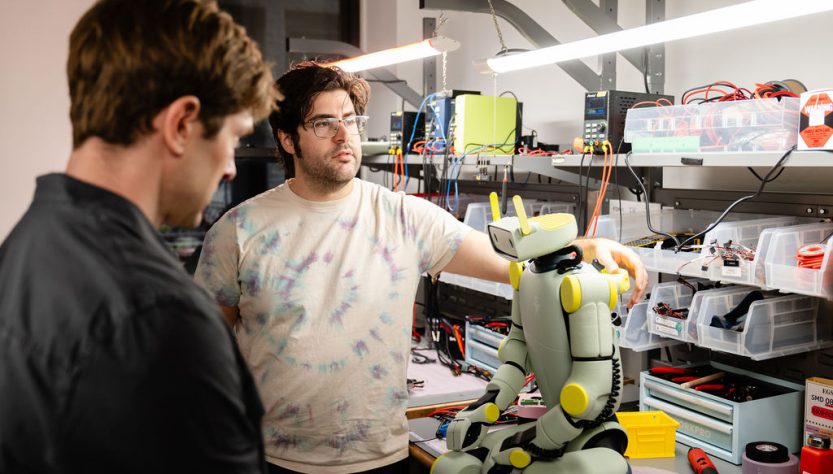
Amazon has recently acquired a startup that creates child-sized humanoid robots.
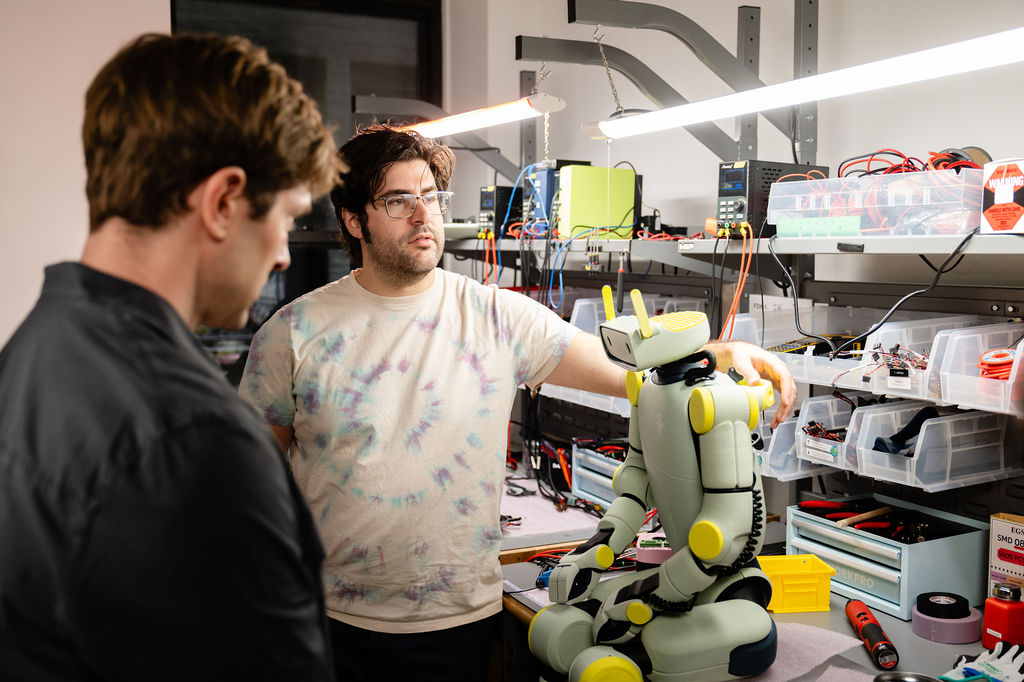
Amazon has announced its acquisition of Fauna Robotics, a startup launched two years ago by former engineers from Meta and Google who are creating child-sized humanoid robots for use at home.
Bloomberg was the first to report the acquisition. The specifics of the agreement were not shared. What is known is that Fauna’s team, including its co-founders, will be integrated into Amazon’s operations in New York City.
“We are thrilled about Fauna’s vision to create capable, safe, and enjoyable robots for all,” an Amazon representative stated in a written email. “With Amazon’s robotics knowledge and years of establishing customer trust in home environments through our retail and devices ventures, we are eager to explore innovative ways to enhance and simplify our customers’ lives.”
Earlier this year, Fauna commenced the shipment of its initial product, a 59-pound bipedal robot named Sprout, to select research and development collaborators.
This marks Amazon’s second robotics acquisition this month—at least known to us. Earlier in the month, Amazon confirmed to TechCrunch that it has also acquired Rivr, a Zurich-based startup recognized for its robot capable of climbing stairs for deliveries. The details of that agreement were not disclosed either.

With $3.5B in new funding, Kleiner Perkins is fully committing to AI

Kleiner Perkins, the notable U.S. venture capital firm, declared on Tuesday that it has secured $3.5 billion in new funding across two distinct funds, a notable rise from the firm’s $2 billion fundraising effort less than two years prior.
Established in 1972, the firm reported raising $1 billion for its 22nd early-stage venture fund and $2.5 billion for a separate entity intended to finance late-stage growth companies.
This significantly larger capital acquisition was anticipated. In recent years, Kleiner Perkins has successfully obtained early investments in several rapidly expanding AI startups, including Together AI, Harvey, and OpenEvidence. The firm is also involved with Anthropic and SpaceX, two companies that are projected to go public this year.
In a climate where exits are rare, Kleiner Perkins achieved notable returns from last year’s IPO of Figma, a design software firm in which it led a $25 million Series B round in 2018. The firm also reportedly gained a good return when its portfolio company Windsurf was acqui-hired by Google last summer.
Known for its historic early investments in Amazon and Google, Kleiner Perkins now operates with a streamlined team of just five partners. The firm has experienced some shifts in leadership recently: Ev Randle has moved to rival firm Benchmark, while Annie Case has shifted from a partnership role to advisory, a spokesperson for Kleiner Perkins confirmed.
Kleiner Perkins is part of a trend of significant fundraising by other VC firms. Thrive Capital recently obtained $10 billion in new commitments, while General Catalyst is reportedly aiming for a similar amount. Additionally, an SEC filing validates TechCrunch’s previous report that Founders Fund has completed a $6 billion closure for its fourth growth fund.

New Mexico has delivered Meta its initial legal loss regarding child safety, with the rest of the nation observing.

On Tuesday, a jury in Santa Fe mandated that Meta pay $375 million in civil fines after determining the company misrepresented the safety of its platforms and put children at risk.
The office of New Mexico attorney general Raúl Torrez described the ruling as a “pivotal moment for every parent worried about what may occur to their children when they are online,” based on a press release issued immediately after the verdict.
The ruling, which came after a trial lasting six weeks, found Meta culpable on both counts presented by the state under its Unfair Practices Act. At $5,000 for each violation — the highest permissible by law — the penalty might appear minor for a corporation valued at $1.5 trillion by public market investors. However, the monetary amount is less significant than the fact that this is the first jury verdict of its kind against Meta concerning harm to minors.
“Meta leaders were aware that their products harmed children, ignored alerts from their own staff, and misled the public about their knowledge,” Torrez stated after the verdict. “Today, the jury sided with families, educators, and child safety advocates in declaring that enough is enough.”
The lawsuit from New Mexico against the company stemmed from a 2023 undercover probe in which state investigators created fake accounts on Facebook and Instagram pretending to be users under 14 years old. These accounts received sexually explicit content and were solicited for sex by several men from New Mexico who were arrested in May 2024, with two captured in a motel where they believed they would meet a 12-year-old girl, as indicated by their interactions with the accounts.
The operation was fundamental to the state’s argument. The evidence it generated — in conjunction with internal Meta documents and testimonies from ex-employees — indicated that staff members and external child safety experts consistently expressed concerns about hazards on the platforms and were largely disregarded.
Some of the most damaging evidence emerged from individuals who worked within the company.
Techcrunch event
San Francisco, CA
|
October 13-15, 2026
Arturo Béjar, who served as an engineering and product leader at Meta for six years starting in 2009, recounted to the court (after testifying before the Senate years ago) about his attempts to alert Meta officials after his own 14-year-old daughter encountered unwanted sexual proposals on Instagram. He also testified that the same personalized algorithms that make Meta’s platforms effective at targeting advertisements could also be beneficial to predators.
“The product excels at connecting individuals with similar interests,” Béjar stated, “and if your interest is young girls, it will effectively connect you with young girls.”
Brian Boland, a former vice president of partnerships product marketing at Meta who dedicated nearly twelve years to the company, testified that when he departed in 2020, he “absolutely did not perceive safety as a priority” to CEO Mark Zuckerberg and then-COO Sheryl Sandberg.
Zuckerberg was deposed as part of the lawsuit, and a recording of that deposition, which occurred a year ago but was presented to jurors earlier this month, provided some of the trial’s more notable moments. Zuckerberg labeled research on whether the platforms are addictive as “inconclusive,” a remark that the state contested, pointing out that Meta’s researchers identified that several features were intentionally designed to trigger dopamine responses and prolong time spent on the apps.
When questioned if, as a parent, he had the right to be informed whether a product his own child utilized was addictive, Zuckerberg noted that there was a lot to “unpack in that.” He then mentioned that he and his spouse personally assess whether products are “appropriate for use” before allowing their children to use them and that they “also monitor how they’re utilized.” He indicated that his children are “younger.”
Predictably, Meta announced plans to appeal. “We respectfully disagree with the verdict,” a spokesperson conveyed to media sources, asserting that the company “strives to ensure safety” on its platforms.
The New Mexico lawsuit is far from Meta’s only legal trouble. Meta and YouTube are also featured in an ongoing trial in Los Angeles concerning allegations that their platforms are addictive and have caused harm to young users.
A verdict in that second case may arrive soon. A jury is currently deliberating, in a case initiated by a plaintiff known only as K.G.M., a 20-year-old woman from California who asserts she became addicted to social media during childhood, resulting in anxiety, depression, and body-image issues. (TikTok and Snap were also included as defendants but settled prior to trial.)
On Monday, the judge presiding over the Los Angeles case instructed jurors to continue deliberating after the panel indicated it was struggling to reach a verdict on one of the defendants — suggesting the potential for at least a partial retrial.
Simultaneously, a second phase of the New Mexico case — a bench trial (meaning there is no jury) on public nuisance claims set to commence on May 4 — could lead to additional penalties, alongside court-ordered adjustments to Meta’s platforms, including age verification measures and enhanced protections for minors.
Instead of asserting that Meta violated a specific consumer protection law, the state argues that the company’s platforms have broadly harmed the health and safety of residents in New Mexico.
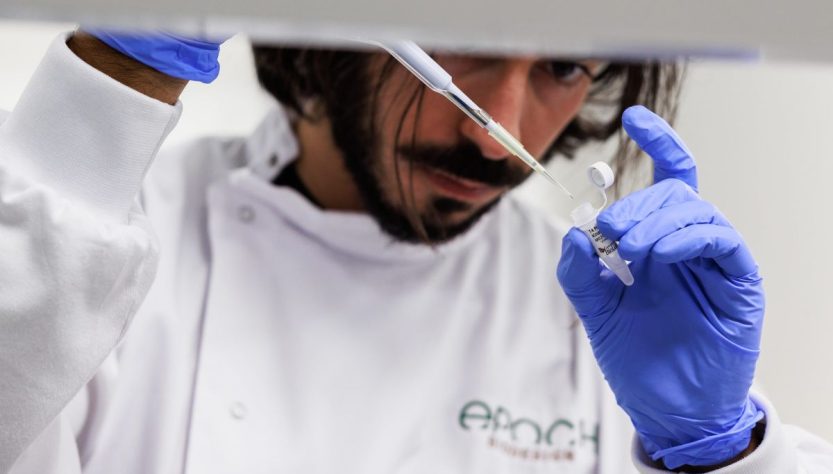
Lululemon wagers that Epoch Biodesign can surpass its own limits, quite literally.

As the world transitions to electricity, the oil and gas sector is relying on plastics to enhance future profits. However, Jacob Nathan is determined to change that narrative.
Nathan began exploring methods to decompose plastics during his high school years. Now, as the founder and CEO of Epoch Biodesign, he has developed a technique that utilizes an array of enzymes to “convert this synthetic waste” into a form suitable for creating more plastic, he mentioned to TechCrunch.
“For us, a bale of textile is the same as a barrel of oil,” Nathan stated, indicating that discarded fabric, rather than crude oil, serves as the foundational material for Epoch’s operations. Unlike oil, the cost of this raw material is not influenced by the unpredictable decisions of global leaders.
Epoch’s strategy focuses on decomposing both pre-consumer and post-consumer plastic waste into monomers — the essential components used to create plastic. The company depends on enzymes, the cellular machinery at a molecular level, to achieve this. However, due to the unpredictable nature of biology, Epoch employs only the enzymes and avoids using the microorganisms that produce them. To obtain these compounds, Epoch collaborates with industrial suppliers that already produce enzymes in large quantities.
Through a series of enzyme treatments, Epoch is able to reclaim over 90% of the target monomers. “The only remnants from our process are dyes, which are collected and can be handled separately,” Nathan explained.
The method is initially focused on nylon 6,6, a durable synthetic material prevalent in products ranging from apparel to airbags, carpets, and climbing ropes.
“It’s the initial synthetic fiber. It’s what was developed by the innovators at DuPont. Its effectiveness ensures its continued use across multiple applications,” Nathan stated.
Techcrunch event
San Francisco, CA
|
October 13-15, 2026
The timing is ideal, Nathan noted. “Recently, the prices of precursors for nylon 6,6 and other materials have surged as much as 150% based on spot pricing,” Nathan remarked. By utilizing waste textiles instead of petroleum, Epoch can completely avoid such fluctuations. “When we separate the material production from the processes of extraction, refinement, and the unpredictability tied to fossil carbon, we can establish far greater consistency.”
This proposal has struck a chord with investors, including the apparel powerhouse Lululemon, which generates significant amounts of clothing derived from plastics. Lululemon recently took part in a $12 million funding round that also featured Exantia, Happiness Capital, Kompas VC, and Leitmotif.
The fundraising will support the establishment of a demonstration-scale facility close to Imperial College London; the company aims to follow this with a commercial-scale facility expected to commence operations in 2028, which should have the capability to generate 20,000 metric tons annually of monomer.
Once fully operational, Nathan mentioned that Epoch may expand its efforts to recycle additional plastics. “The technology can be adapted for various materials and types of plastics,” he said. “Nylon 6,6 will achieve maturity first, but we have some thrilling developments in the pipeline.”