
Meta Is Shutting Down Horizon Worlds on Meta Quest

Meta Is Shutting Down Horizon Worlds on Meta Quest

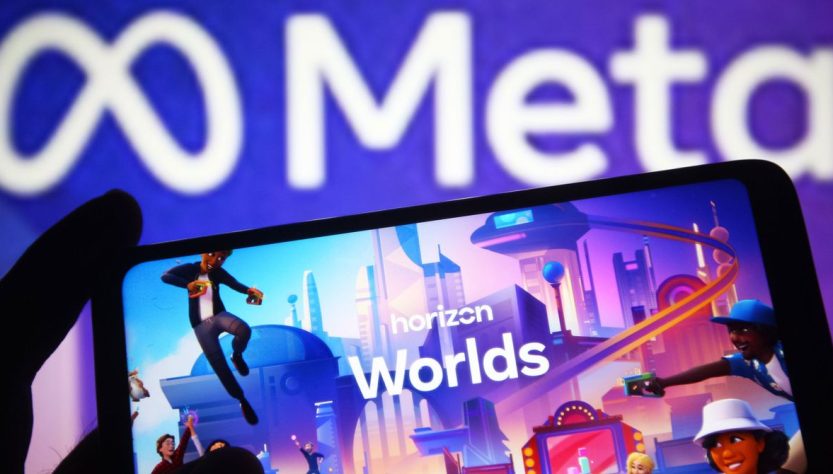
Meta has revealed the closure of its virtual reality platform, Horizon Worlds. An email sent to users indicated that the social VR universe will cease operations on Quest VR headsets, with Horizon Worlds being taken off the Quest store on March 31. By June 15, the VR environments will be fully discontinued, shifting the service to a mobile-only platform. This move comes after substantial reductions to Meta’s Reality Labs division earlier this year, which experienced a 10% decrease in VR department personnel.

Horizon Worlds was Meta’s bold initiative to create the metaverse, inspired by Neal Stephenson’s “Snow Crash.” The project was pivotal to Meta’s rebranding from Facebook to concentrate on virtual reality pursuits. However, Horizon Worlds encountered backlash and tepid popularity, evident in the reactions to its termination on the r/oculus subreddit. It was frequently ridiculed for its initial flaws, such as avatars without legs and their “blank-eyed” look, spawning viral memes featuring CEO Mark Zuckerberg’s avatar.

At first, Horizon Worlds mainly attracted younger users, resulting in an inconsistent user base, despite Meta’s significant financial backing and initiatives, including virtual concerts with famous artists like Imagine Dragons and Coldplay. Still, Meta’s platform was less favored than alternatives like VRChat, which cultivated communities through virtual parties and events.

As Meta redirects its attention to AI and products like Ray-Ban smart glasses, it has notably curtailed investments in its metaverse initiatives, including offerings like Supernatural Fitness. Mike Proulx from Forrester noted that this shift was anticipated and emphasized the challenges of constructing a mass social platform dependent on specific hardware that lacks broad user adoption.
Ultimate MicroSD Cards for Your Camera, Switch, and More

Ultimate MicroSD Cards for Your Camera, Switch, and More

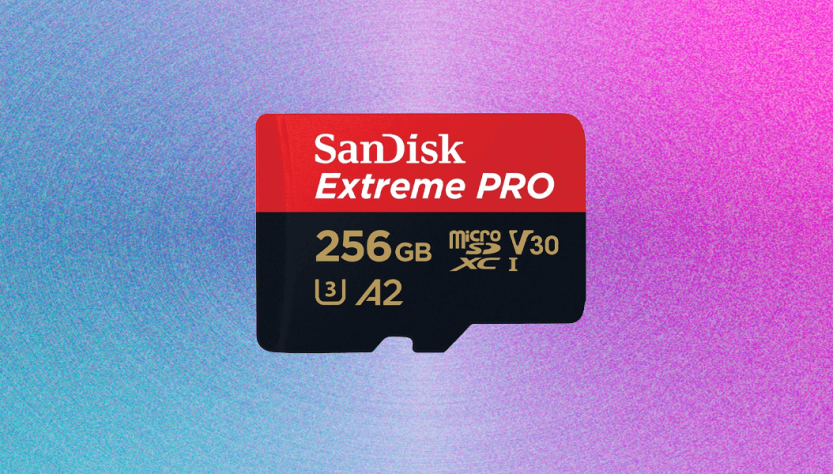
When selecting a MicroSD card, the array of figures, brands, and terms such as Pro, Extreme, and Express can be daunting. Generally, if you’re not a semi-professional photographer or videographer, it’s advisable to buy from reputable brands like PNY, SanDisk, and Lexar. Look for the “U” symbol with a 3 inside or a “V30” which offers a solid balance of speed and cost. There are exceptions:

For those using a high-end camera, you might consider a V60 MicroSD card if it fits your budget, as certain cameras can take advantage of enhanced video features with faster cards.

If you’re using a Nintendo Switch 2, a more expensive MicroSD Express card is necessary for playing games, although standard cards are adequate for transferring images and videos.

**Capacity**

Your storage requirements may differ, but when comparing 128 GB to 1 TB, be aware of the challenges of swapping cards on the move with increased capacities, as well as the sharply rising prices for 1 TB and 2 TB cards. The cost gap between 256 GB and 512 GB is narrower, so it might be worthwhile to opt for slightly larger sizes. Confirm that your device supports higher capacity cards above 64 GB, recognized as “SDXC” (Extended Capacity), which is currently the most common type.

**Speed**

For further information on MicroSD speeds, a detailed explanation is available, but here’s a brief summary. The minimum write speed of each card is indicated by a letter and number, where the number represents MB/s and the letter signifies the generation. C10, U1, and V10 represent equivalent speeds, merely labeled differently. Cards often display multiple symbols. For comprehensive details, the SD Association’s website provides a chart that compares speeds. Typically, cards that are slower than V30/U3 are rare in most shops, although they may be included with electronics that don’t require higher speeds.