
Trump Administration Aims to Shield Musk and X from $137 Million EU Penalty

Trump Administration Aims to Shield Musk and X from $137 Million EU Penalty

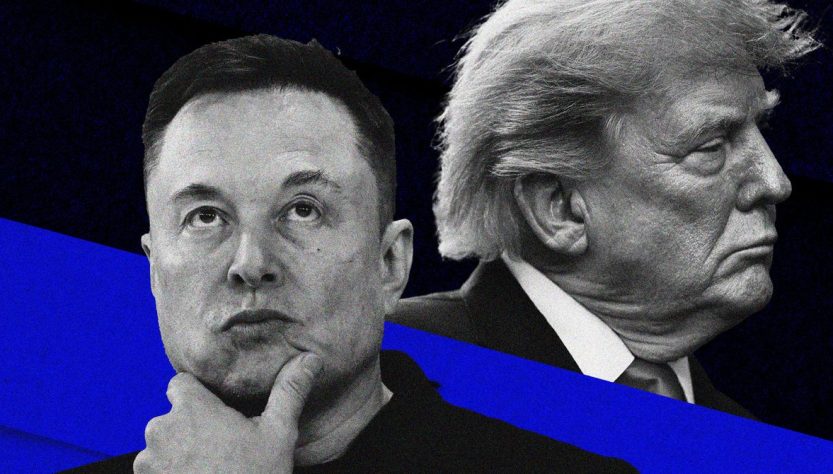
The United States government is working to aid Elon Musk and his social media platform X in evading a $137 million penalty levied by the European Union, amplifying its critique of the bloc’s technology regulations.

The US Department of Justice, aided by the Department of State, has submitted a request to back Musk’s legal efforts to dismiss the case in the EU’s General Court. This court, situated in Luxembourg, will determine whether the US can take part.

The US administration contends that its participation is essential to safeguard American enterprises. This fine is particularly noteworthy as it marks the inaugural enforcement under the Digital Services Act, which imposes greater responsibilities on online platforms to curb illegal and harmful content, especially on major sites. It underscored the economic importance of American companies such as Meta’s Facebook and Instagram, Google’s YouTube, and Microsoft’s LinkedIn, which are based in the US.

“We will not permit the European Commission to overextend its reach in controlling American innovation and growth engines,” remarked Assistant Attorney General Brett A. Shumate from the Justice Department’s Civil Division.

This case has implications for US-EU relations. The act has been a source of contention, with former US President Donald Trump denouncing the penalties as “overseas extortion.” Last year, he threatened to levy tariffs on nations implementing digital regulations, alleging they discriminate against American technology. Vice President JD Vance has denounced the Digital Services Act’s provisions as “authoritarian censorship.”

In December, the European Commission imposed a fine of €120 million on X following a two-year investigation that found violations of transparency requirements. The Commission deemed it misleading to categorize users with blue checkmarks as “verified accounts” solely based on payment. It stated that an inadequate advertising repository and the failure to provide public data for research hindered assessments of platform risks. In July, the Commission approved X’s strategy to resolve data access challenges, allotting X six months for execution.

In February, Musk and X challenged the ruling, describing the EU’s investigation as “incomplete and superficial,” with a “twisted” interpretation of DSA obligations. They asserted that they had not been afforded “rights of defense, suggesting prosecutorial bias.”

Musk has furthermore criticized the financial and administrative strains resulting from heightened transparency demands, as governments around the world strive to comprehend and mitigate risks associated with social media platforms. In July, he contended that Australia’s data-gathering related to its ban on social media for under-16s contravened international law. Julia Hörnle, a professor of internet law at Queen Mary University, asserted that Australian regulators are entitled to mandate disclosures regarding a company’s operations within the country.
The Justice Department Has Disbanded Its Voting Rights Division

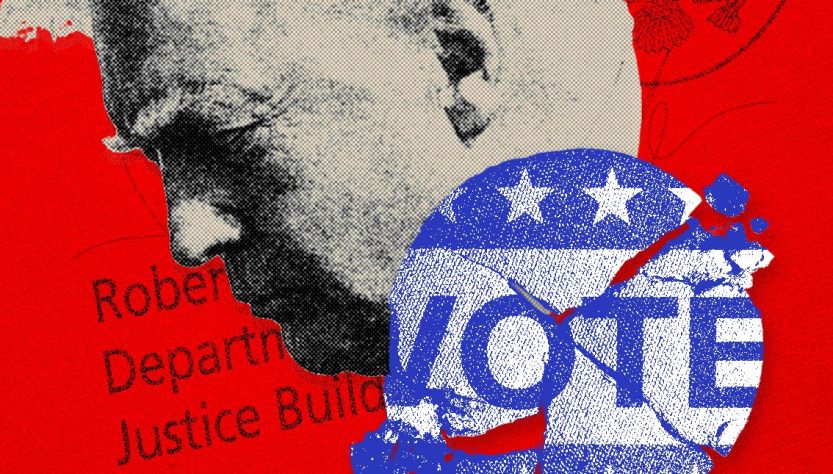
The Justice Department Has Disbanded Its Voting Rights Division

When a fresh administration arrives in Washington, DC, there are always shifts in policy focuses and staff. Alex, an attorney within the Department of Justice’s Voting Section, had managed to navigate Donald Trump’s initial term and believed he could endure the second.

Just hours after the president’s inauguration, he recognized his miscalculation.

“I was simply mistaken,” he states. “It was drastically different from the first Trump administration. There was an undeniable feeling that this would not be identical. And then within the Voting Section, the response was to start dismissing cases.”

The Voting Section was created in the agency’s Civil Rights Division after the groundbreaking Voting Rights Act of 1965 to guarantee that every American possesses an equal right to vote.

Alex, whose name has been altered to safeguard his identity, is among the numerous attorneys who have been removed since Trump returned to the White House.

Approximately 30 lawyers were present in the Voting Section when Trump was inaugurated in January 2025. Three months later, only two remained. The departing attorneys have been supplanted by half a dozen newcomers with minimal federal court experience, making numerous fundamental mistakes in court documents. They have also shown a readiness to adhere to Trump’s anti-voting orders, filing numerous lawsuits in an effort to compel states to submit unredacted voter rolls.

WIRED consulted a dozen experts and former Voting Section attorneys regarding the extensive dismantling of the Justice Department’s Voting Section under Trump. Many spoke anonymously due to concerns about backlash from the Trump administration.

As the November midterms approach, multiple sources inform WIRED that the harm inflicted on the DOJ’s Voting Section may be beyond repair. They express concern that the ultimate aim is to furnish Trump with what they term evidence to usurp control of elections from the states. “I believe in the long run, it’s about creating material to contest or subvert elections,” states Alex, who has worked in the Voting Section for many years.

“They’ve transformed what was once the centerpiece of the Civil Rights Division, the Voting Section, into a tool against voters,” Michelle Kanter Cohen, policy director and senior counsel at the Fair Elections Center, informs WIRED. “This was formerly a section that upheld individuals’ voting rights, fought against intimidation, and enforced federal voting regulations designed to shield individuals from discrimination and to make voting fair and accessible. It is being twisted into a political instrument to advance conspiracy theories of the Trump administration.”

Former attorneys from the Voting Section concur. “I dedicated eight years in the Voting Section as a trial attorney engaged in what was the core mission of the section since its inception, which was enforcing the Voting Rights Act and other federal laws that safeguard the right to vote,” Eileen O’Connor, who is now senior counsel at the nonprofit Brennan Center for Justice, tells WIRED. “The activities they are pursuing now are the exact opposite.”

The White House did not respond to inquiries regarding the new Voting Section lawyers, but spokeswoman Abigail Jackson stated to WIRED that “the Civil Rights Act, National Voting Rights Act, and Help America Vote Act all grant the Department of Justice complete authority to ensure states align with federal election laws, which require accurate state voter rolls.”

Voting Rights

In the period following the 2020 presidential election, Trump attempted to weaponize the Justice Department by appointing special counsels to probe into election conspiracy theories. It failed. At every instance, officials and political appointees at the department resisted, even threatening mass resignations.

Currently, Trump is again looking to exploit the power of the Justice Department to erode confidence in the election process. This time, sources inform WIRED, no one is standing in opposition.