

Trump Administration Aims to Shield Musk and X from $137 Million EU Penalty

Trump Administration Aims to Shield Musk and X from $137 Million EU Penalty

The United States government is working to aid Elon Musk and his social media platform X in evading a $137 million penalty levied by the European Union, amplifying its critique of the bloc’s technology regulations.

The US Department of Justice, aided by the Department of State, has submitted a request to back Musk’s legal efforts to dismiss the case in the EU’s General Court. This court, situated in Luxembourg, will determine whether the US can take part.

The US administration contends that its participation is essential to safeguard American enterprises. This fine is particularly noteworthy as it marks the inaugural enforcement under the Digital Services Act, which imposes greater responsibilities on online platforms to curb illegal and harmful content, especially on major sites. It underscored the economic importance of American companies such as Meta’s Facebook and Instagram, Google’s YouTube, and Microsoft’s LinkedIn, which are based in the US.

“We will not permit the European Commission to overextend its reach in controlling American innovation and growth engines,” remarked Assistant Attorney General Brett A. Shumate from the Justice Department’s Civil Division.

This case has implications for US-EU relations. The act has been a source of contention, with former US President Donald Trump denouncing the penalties as “overseas extortion.” Last year, he threatened to levy tariffs on nations implementing digital regulations, alleging they discriminate against American technology. Vice President JD Vance has denounced the Digital Services Act’s provisions as “authoritarian censorship.”

In December, the European Commission imposed a fine of €120 million on X following a two-year investigation that found violations of transparency requirements. The Commission deemed it misleading to categorize users with blue checkmarks as “verified accounts” solely based on payment. It stated that an inadequate advertising repository and the failure to provide public data for research hindered assessments of platform risks. In July, the Commission approved X’s strategy to resolve data access challenges, allotting X six months for execution.

In February, Musk and X challenged the ruling, describing the EU’s investigation as “incomplete and superficial,” with a “twisted” interpretation of DSA obligations. They asserted that they had not been afforded “rights of defense, suggesting prosecutorial bias.”

Musk has furthermore criticized the financial and administrative strains resulting from heightened transparency demands, as governments around the world strive to comprehend and mitigate risks associated with social media platforms. In July, he contended that Australia’s data-gathering related to its ban on social media for under-16s contravened international law. Julia Hörnle, a professor of internet law at Queen Mary University, asserted that Australian regulators are entitled to mandate disclosures regarding a company’s operations within the country.
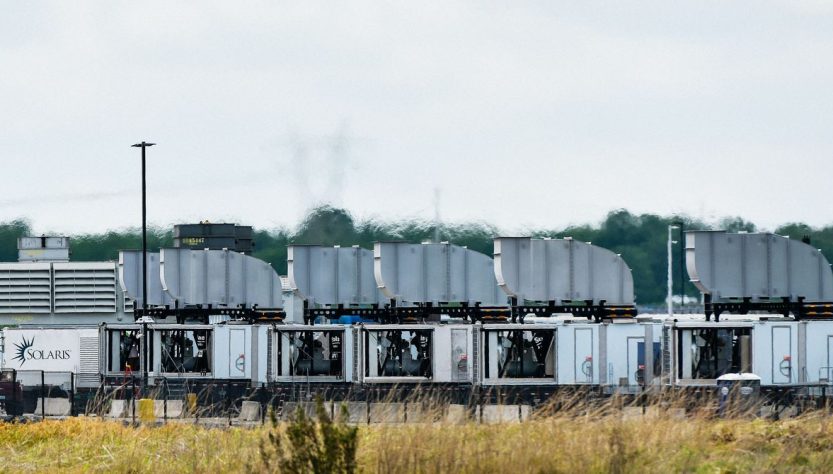
xAI Purchases 19 Gas Turbines During Continuing Legal Dispute

xAI Purchases 19 Gas Turbines During Continuing Legal Dispute

xAI has incorporated 19 natural gas turbines into its second data center campus located in Southhaven, Mississippi, over the last two months, as per internal emails reviewed by WIRED. These additions come amidst xAI’s ongoing legal battle with the NAACP and various environmental organizations, claiming the company is breaching the Clean Air Act by operating over twenty natural gas turbines at the location without the necessary air permits. Correspondence between an official from the Mississippi Department of Environmental Quality and a representative from Trinity Consultants, acquired through a public records request by the Southern Environmental Law Center and shared with WIRED, reveals that xAI set up 19 portable gas turbines on its Southaven site between late March and early May. This raises the total count to 46 turbines at the site. A spreadsheet attached in the email to MDEQ includes a column titled “Total Power Output” that seems to enumerate the megawatt capacity of each turbine on the premises. xAI appears to have added on more than 500 megawatts of natural gas turbines since mid-March. Combusting natural gas can emit greenhouse gases and deteriorate air quality. Officials from the MDEQ and xAI did not respond to WIRED’s request for comments. The introduction of the new turbines to the site, referred to as Colossus 2, was initially reported by Mississippi Today. “As noted by the facility, all portable/temporary turbines are outfitted with control technology to reduce emissions,” agency spokesperson Jan Schaefer informed Mississippi Today. “MDEQ is assessing the situation and will notify the facility when it can no longer install additional portable/temporary turbines on-site.” In April, the NAACP, in conjunction with the SELC and Earthjustice, initiated a lawsuit against xAI, asserting that the company had been managing a “private power plant” in Southaven by operating 27 gas turbines without the required permits. Ben Grillot, an attorney with SELC, states that the organization identified six more turbines at the site during a drone flyover in April. It was only after reviewing the MDEQ emails that the team discovered the presence of 19 additional turbines. Based on the dates in the email reviewed by WIRED, eight of the 19 new turbines, amounting to over 200 megawatts of output, were installed following the lawsuit filing. The original xAI location, Colossus 1, situated just across the state border in Memphis, Tennessee, faced significant backlash in 2024 after residents claimed that gas turbines at that site were operating without a permit. Colossus 1 is located in Boxtown, a historically Black neighborhood that has long struggled with air quality issues. Regulators in both Tennessee and Mississippi have indicated that due to the non-stationary nature of xAI’s turbines, the company has a year to utilize them without permits in accordance with the Clean Air Act. Last July, Memphis’ local health department granted a permit for the turbines at the Colossus 1 location, despite considerable community opposition. In March, confronted with similar community protests, the MDEQ issued an air permit for the Southaven site to operate 41 gas turbines. (SELC contends that the 27 turbines cited in its lawsuit and those added to the site in recent months are not included in this permit. Neither xAI nor the MDEQ provided answers to WIRED regarding whether the turbines mentioned in the emails are encompassed by the air permit approved in March.) Drone footage and public records obtained by the news outlet Floodlight indicate that several turbines at the site were operational in the weeks leading up to the permit approval by the MDEQ.