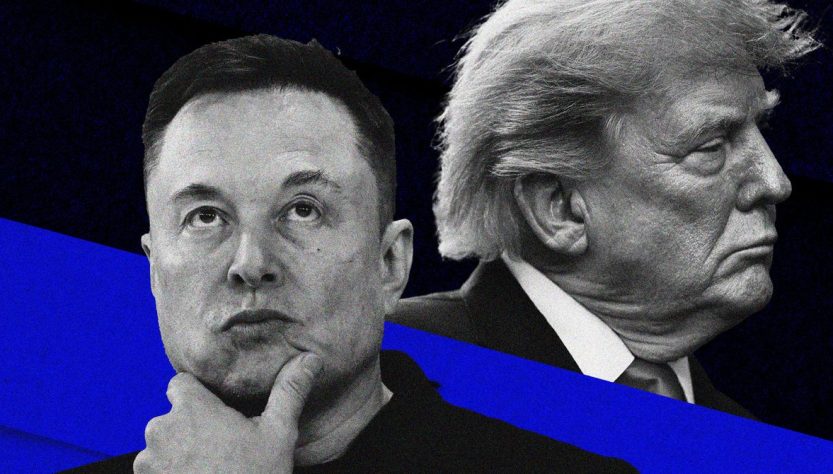
The United States government is working to aid Elon Musk and his social media platform X in evading a $137 million penalty levied by the European Union, amplifying its critique of the bloc’s technology regulations.
The US Department of Justice, aided by the Department of State, has submitted a request to back Musk’s legal efforts to dismiss the case in the EU’s General Court. This court, situated in Luxembourg, will determine whether the US can take part.
The US administration contends that its participation is essential to safeguard American enterprises. This fine is particularly noteworthy as it marks the inaugural enforcement under the Digital Services Act, which imposes greater responsibilities on online platforms to curb illegal and harmful content, especially on major sites. It underscored the economic importance of American companies such as Meta’s Facebook and Instagram, Google’s YouTube, and Microsoft’s LinkedIn, which are based in the US.
“We will not permit the European Commission to overextend its reach in controlling American innovation and growth engines,” remarked Assistant Attorney General Brett A. Shumate from the Justice Department’s Civil Division.
This case has implications for US-EU relations. The act has been a source of contention, with former US President Donald Trump denouncing the penalties as “overseas extortion.” Last year, he threatened to levy tariffs on nations implementing digital regulations, alleging they discriminate against American technology. Vice President JD Vance has denounced the Digital Services Act’s provisions as “authoritarian censorship.”
In December, the European Commission imposed a fine of €120 million on X following a two-year investigation that found violations of transparency requirements. The Commission deemed it misleading to categorize users with blue checkmarks as “verified accounts” solely based on payment. It stated that an inadequate advertising repository and the failure to provide public data for research hindered assessments of platform risks. In July, the Commission approved X’s strategy to resolve data access challenges, allotting X six months for execution.
In February, Musk and X challenged the ruling, describing the EU’s investigation as “incomplete and superficial,” with a “twisted” interpretation of DSA obligations. They asserted that they had not been afforded “rights of defense, suggesting prosecutorial bias.”
Musk has furthermore criticized the financial and administrative strains resulting from heightened transparency demands, as governments around the world strive to comprehend and mitigate risks associated with social media platforms. In July, he contended that Australia’s data-gathering related to its ban on social media for under-16s contravened international law. Julia Hörnle, a professor of internet law at Queen Mary University, asserted that Australian regulators are entitled to mandate disclosures regarding a company’s operations within the country.