Spotify introduces AI-enhanced Prompted Playlists in the UK and additional markets

Spotify introduces AI-enhanced Prompted Playlists in the UK and additional markets

Following a successful test of its AI-driven “Prompted Playlist” feature in New Zealand and a recent launch in the U.S. and Canada, Spotify revealed on Monday that it will be introducing this tool to Premium users in the U.K., Ireland, Australia, and Sweden.

The Prompted Playlist feature enables users to generate personalized playlists by simply articulating their musical preferences in their own words. Rather than searching for specific songs or artists, users can outline the mood, circumstance, or inspiration they seek, while Spotify handles the rest.

To utilize the feature, users click “Create” and then choose “Prompted Playlist,” followed by entering any prompt in English. This feature is crafted to understand themes such as moods, aesthetics, and even experiences. Prompts can range from very general to highly specific, mentioning musical periods, genres, activities, lyrics, instruments, or even requesting a playlist themed around a TV series, film, or personal achievements. Users can also indicate whether they prefer the playlist to contain mainly new tracks or only selections from their library in the prompt.

After a prompt is put forward, Spotify’s AI curates a personalized playlist that fits the request. The system relies on the user’s listening history and blends it with contemporary music and cultural trends. In addition, each track includes a brief description explaining why it was chosen for that specific playlist.

Users can enhance their playlists by modifying their prompts or starting anew. For individuals whose musical preferences are ever-changing, playlists can be set to refresh automatically on a daily or weekly schedule.
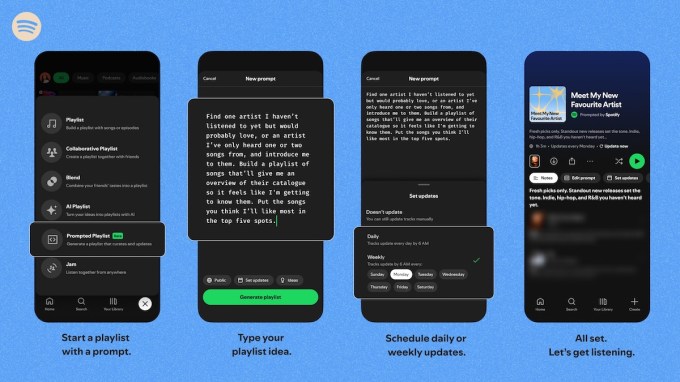
Image Credits:Spotify

As this feature is still in beta, Spotify indicated that adjustments may occur as the company processes feedback, and that currently there are usage restrictions. Some users have mentioned reaching limits after approximately 20 or 30 prompts.

Spotify has recently broadened its AI functionalities across its platform, including Page Match, which enables users to scan a physical book page to access the respective section in the audiobook, and About the Song. The platform also revised its song lyrics feature to include worldwide translations and offline availability. Last week, SeatGeek collaborated with Spotify to facilitate listeners in finding ticket links for concerts on an artist’s page or upcoming tour dates within the app. 

Techcrunch event

Boston, MA
|
June 9, 2026

Internally, the company has integrated AI into its operations, with co-CEO Gustav Söderström stating earlier this month that Spotify’s top developers haven’t needed to write any code since December, thanks to AI.

Spotify is also enhancing its audiobook segment by moving into sales of physical books. Soon, users in the U.S. and U.K. will have the option to purchase physical editions directly through the app.

The US Saw a Notable Increase in Battery Demand Last Year

The US Saw a Notable Increase in Battery Demand Last Year

In 2025, the United States saw a historic rise in energy storage, as detailed in a freshly released solar industry report on Monday. This boom in battery storage signifies a considerable milestone for clean energy amid the renewable-unfriendly second term of the Trump administration and suggests that utilities may be modifying electric grids to meet increasing demand across the country.

The report, issued by the Solar Energy Industries Association (SEIA), corresponds with recent findings from Bloomberg New Energy Finance, showcasing a comparable surge in battery development. As per SEIA, the United States added 57 gigawatt hours of new energy storage in 2025, representing nearly a 30 percent rise from the prior year. This capacity is enough to supply power to over five million homes each year.

The report predicts a 21 percent market growth by the conclusion of this year, with an additional 70 gigawatt hours anticipated in 2026. These statistics sharply contrast with less than a decade ago when storage on the grid amounted to only around half a gigawatt.

Batteries have demonstrated considerable political endurance. Tax incentives for wind and solar were cut last summer amid legislative challenges to renewables, yet faced opposition from Republican lawmakers in regions with clean energy initiatives. Nonetheless, battery tax credits largely remained unharmed.

In spite of the federal administration’s position on renewables, batteries and solar experienced considerable advancement in certain conservative states last year. Texas stands out, where solar energy constituted over 15 percent of summer demand, exceeding coal for the first time. SEIA projects that Texas will outpace California this year in terms of gigawatt hours of storage deployed.

Jigar Shah, from the advisory firm Multiplier and a former director of the Department of Energy’s Loan Programs Office, points out that Texas’s independent and deregulated power grid favors solar and batteries over alternative solutions, notwithstanding White House opposition. Recent surveys reveal that MAGA voters back solar power, and prominent individuals like Katie Miller have voiced support for solar energy.

“Texas fundamentally ignores cultural prejudices,” Shah states. “‘Heed the market signals. Construct whatever you wish, whether it’s coal plants or batteries.’ Batteries received the most financial backing.”

While solar and batteries thrive in Texas, the majority of battery installations last year were standalone, not linked to particular solar projects, which is a positive trend for grids coping with heightened demand.

Generally, US energy grids utilize only about 50 percent of their available energy on a daily basis. This intentional underutilization guarantees capacity for peak demand days. Deploying batteries at all levels of the grid aids in harnessing surplus energy during off-peak hours to mitigate waste.

NASA Delays Artemis II Lunar Mission Launch Once More

NASA Delays Artemis II Lunar Mission Launch Once More

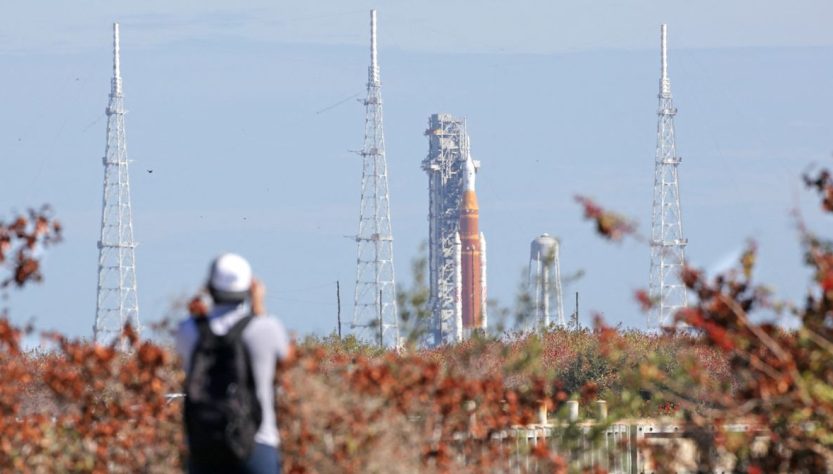
NASA has revealed yet another postponement for the launch of Artemis II, the crewed lunar flyby mission, now aiming for an April launch window. Originally scheduled for March 6, the agency cited a rocket-related issue as the cause for the delay. Administrator Jared Isaacman detailed the problem as a disruption in helium flow within the Space Launch System’s interim cryogenic propulsion stage, essential for engine purging and pressurizing fuel tanks. This system had functioned correctly during two previous dress rehearsals but encountered failures during normal operations.

As a result of this issue, repairs at the Vehicle Assembly Building are required, ruling out any possibility of a March launch. The rocket is being taken back to the hangar. “This setback is disappointing to many, especially our diligent NASA team,” Isaacman shared on X. “Similar to the 1960s, our journey is filled with challenges.”

Can Artemis II move forward in April? NASA is accelerating preparations to ensure this window remains feasible, contingent on further data and scheduling modifications.

Artemis II was initially set to launch between February 6 and 11, but minor hydrogen leaks and technical issues surfaced during its wet dress rehearsal, prompting a reassessment of astronaut safety and a subsequent launch delay. A successful second rehearsal on February 19 indicated no leaks, with 700,000 gallons of liquid propellant loaded and hydrogen levels managed, enhancing engineer confidence.

A follow-up press conference confirmed a tentative liftoff date of March 6, but on February 20, helium flow complications arose again, resembling issues from Artemis I. Isaacman proposed potential causes such as a faulty filter, valve, or connector.

Isaacman noted, “Expectations are high considering the resources utilized, and Artemis intends to exceed Apollo.” Once launched, Orion will achieve a distance record beyond any manned spacecraft, exceeding Apollo 13’s 400,171 kilometers mark on its tenth day, culminating with a landing in the Pacific Ocean.

Though Artemis II will not feature a lunar landing, unlike its successor Artemis III, its importance lies in demonstrating NASA’s technical capabilities for a moon return and ushering in a new era of space exploration.

This story originally appeared in WIRED en Español and was translated from Spanish.

Comprehending At-Home STI Assessments: Benefits, Drawbacks, and Suggestions (2026)

Comprehending At-Home STI Assessments: Benefits, Drawbacks, and Suggestions (2026)

If the thought of going to a doctor’s office induces anxiety or discomfort, you might opt to gather your own samples rather than having them collected by healthcare professionals. Home STD tests can be more convenient based on your location and means of transportation, and they may be an out-of-pocket expense, which could align better with your insurance coverage. Regrettably, STIs are often stigmatized, yet there should be no embarrassment in taking charge of your sexual health. Home tests might provide a discreet choice if you’re worried about others’ perceptions.

**Cons of At-Home STI Tests**

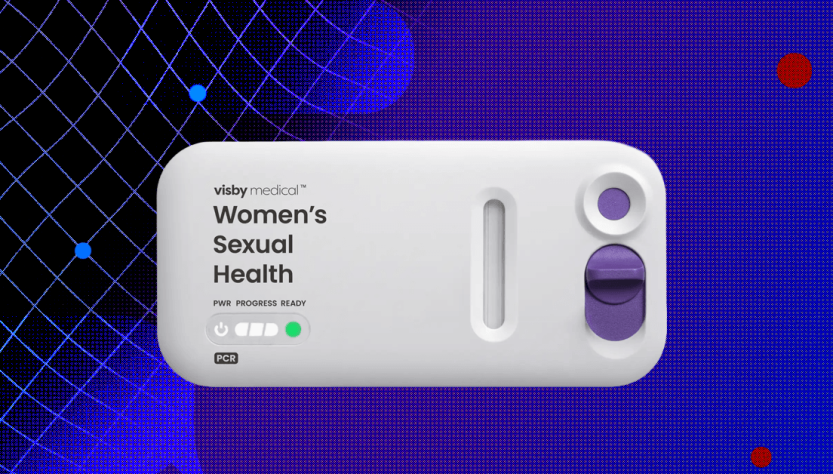
At-home STI tests can be expensive. While some may be eligible for FSA and HSA or potentially covered by insurance, free testing offered by local health departments or organizations like Planned Parenthood might be more affordable than at-home testing. Errors in sample collection can result in false negatives, necessitating in-person doctor appointments for treatment despite positive outcomes. Verify that the lab is properly regulated and that the test is from a trustworthy provider. Adhere to kit instructions meticulously and take precautions against contamination, keeping in mind factors like improper storage or recent usage of products that could affect results, according to Dr. Gary Schoolnik, Chief Medical Officer at Visby Medical.

Your health status and timing can also influence test reliability. Elements such as menstruation or recent antibiotic intake might impair sample quality; a healthcare professional can modify testing procedures as needed. In urgent situations—like evident symptoms, being immunocompromised, pregnancy, or known STI exposure—seek professional medical assistance rather than relying on home testing. Roos cautions against depending solely on home kits since inaccurate results may lead you to overlook symptoms. For confidentiality, an ordinary doctor’s visit might be more suitable than having STD test kits at home. If a positive result is probable, receiving the information from a healthcare provider may be more advantageous than discovering it independently. Weigh these factors before opting for home testing.

Olympic Memorabilia from the 2026 Winter Games Command Premium Prices Online

Olympic Memorabilia from the 2026 Winter Games Command Premium Prices Online

As the 2026 Winter Olympics wrap up, a new endeavor commences: the frenzy to cash in on exclusive keepsakes. Once the Games conclude, the most coveted collectibles become hard to find, swiftly snagged by resellers and deal-seekers, primarily accessible on online marketplaces like eBay and Vinted. The steep prices already established for this merchandise indicate they will be of significant worth.

Among the Milano Cortina Olympic memorabilia online, the plush toys of mascots Milo and Tina and the Swatch timepieces distributed to volunteers are particularly notable. Pins are also in demand, especially Snoop Dogg’s limited edition and those commemorating torchbearers.

Initially, Milo and Tina stuffed animals were priced between €15 and €50 ($18 to $60), depending on their size. Currently, the smallest stoat plush toys are listed at three times and the larger ones at four times their original cost. Some remain at original prices on the Olympics shop, but shipping may not happen until June.

Swatch watches were exclusive to volunteers and not offered for sale. Unused Swatches are surfacing for sale, with prices ranging from €200 to €500 ($235 to $590).

A Samsung Galaxy Z Flip 7 smartphone awarded to athletes has appeared on eBay with a “Buy It Now” price of $1,680.

Olympics souvenir pins are still available through the official online store starting at about €15, while resale prices have doubled. Limited-edition pins from sponsors such as Samsung fetch around €100 ($118). WIRED Italia discovered pins awarded to torchbearers being sold online for about €600 ($707). Replicas of Olympic medals can also be found, priced approximately at €50 for a single medal and €150 to €200 ($177 to $236) for a complete set.

Sony’s WH-CH720N Headphones Offer Great Value at Their Regular Price, but Currently, They Are a Bargain.

Sony’s WH-CH720N Headphones Offer Great Value at Their Regular Price, but Currently, They Are a Bargain.

We have assessed a variety of noise-canceling headphones, and although the Sony WH-CH720N has a somewhat peculiar name, they stand out as the best budget-friendly choice we’ve encountered. They typically offer great value at the regular $178 MSRP, but at the moment, they can be found for $95 on Amazon and $100 at Best Buy.

These headphones are well-made and aesthetically pleasing, boasting impressive active noise cancellation and strong audio quality. They do not fold and come without a case; however, a separate case can be purchased if desired.

They are lightweight and adjust to the surroundings for the best sound experience. If you are in search of economical over-ear wireless headphones featuring active noise cancellation, these are a fantastic option. With a battery life of 35 hours, purchasing them for under $100 is a straightforward choice for those who are budget-aware. We have never encountered this price before.

Although we are not close to events like Amazon Prime Day or Black Friday, this is one of several headphone offers we have recently found. Explore other articles if you are interested in wireless gaming earbuds or open-style earbuds.

New Duties Enforced by Trump to Circumvent Supreme Court Ruling

New Duties Enforced by Trump to Circumvent Supreme Court Ruling

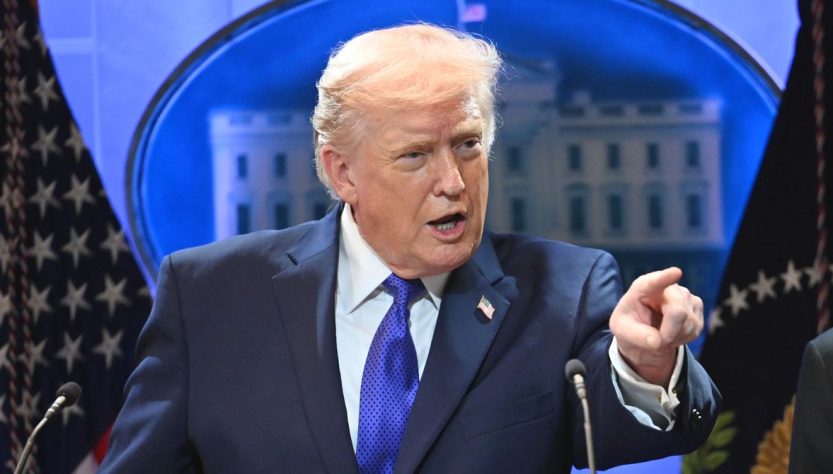
President Trump is enacting a 10 percent tariff on almost all imports into the US, following a Supreme Court ruling that annulled most tariffs that were applied by the US government last year.

In an executive order issued Friday evening, Trump mentioned a few exceptions, such as imports of essential minerals, beef and fruits, automobiles, pharmaceuticals, and items from Canada or Mexico. The new tariffs are expected to take effect on February 24, 2026.

During a press briefing on Friday afternoon, Trump voiced his disappointment over the Supreme Court’s ruling and openly criticized the six justices who opposed his trade policies, calling them “a disgrace to our nation.” When asked about how two of the justices he appointed, Neil Gorsuch and Amy Coney Barrett, voted to overturn, Trump referred to them as “an embarrassment to their families.”

The revised trade approach is based on Section 122 of the Trade Act of 1974, which enables the president to independently and swiftly implement tariffs of up to 15 percent in scenarios of “large and serious” trade deficits. These tariffs last for just 150 days unless Congress extends them. Similar to the International Emergency Economic Powers Act (IEEPA), this legislation has not previously been used by a US president in this way.

After the 150-day period, it is possible for Trump to repeatedly reapplied Section 122 tariffs. Alternatively, the administration may utilize this duration to formulate other tariff strategies, effectively changing legal frameworks to sustain similar regulatory impacts, as noted by Gregory Husisian, a partner and litigation attorney at Foley & Lardner LLP, who has aided numerous companies with tariff refund requests. “[Section 122 tariff] is for a limited time period, so it’s going to be a bridge authority,” Husisian remarks.

Meanwhile, the Trump administration could accelerate the process of conducting trade inquiries based on national security or unfair trade practices abroad, which are necessary for implementing Section 301 and Section 232 tariffs. “We are also starting multiple Section 301 and other inquiries to safeguard our country from unfair trade practices by other nations and companies,” Trump mentioned at the press briefing, referring to these alternative tariff options that require more time to activate.

In a different executive order, the administration confirmed that despite the nullification of IEEPA tariffs, the de minimis exemption—which exempted ecommerce parcels valued under $800 from taxes—remains on hold. The termination of de minimis last year resulted in considerable delays in package processing at the US border and increased prices on budget shopping platforms.

During the press briefing, Trump did not clarify what would happen with companies requesting tariff payment refunds. The Supreme Court’s ruling did not specify how the tariffs should be refunded. In response to a reporter’s question on the subject, Trump suggested that the matter would likely be resolved in court.

Experts inform WIRED that they expect the refund process to be intricate and lengthy, potentially necessitating companies to file grievances and calculate the amounts they believe are owed. The government could dispute the assessed amounts. This process could take several months up to more than two years.

The Supreme Court ruling underscored that the IEEPA provides the president with significant powers during emergencies but does not encompass taxation. In the press briefing, Trump repeatedly misrepresented the ruling: “But now the

4 Best Smart Scales of 2026: Evaluated and Assessed

4 Best Smart Scales of 2026: Evaluated and Assessed

Extra Intelligent Scales

**[Renpho MorphoScan at $150](https://renpho.com/products/morphoscan-scale):** The Renpho MorphoScan full-body scanner bears a strong resemblance to the Runstar FG2015 with nearly the same display and handlebars. Both scales use the same application for data gathering, even permitting concurrent usage. Nonetheless, this scale is not our top choice due to its $15 higher cost. Anticipate some price rivalry soon.

**[Arboleaf Body Fat Scale CS20W at $40](https://www.amazon.com/dp/B0CJBT9XGK):** This economical Bluetooth scale may not be aesthetically pleasing, featuring large silver electrodes and a sizable display. While weight readings are clear, the other six metrics are less easy to interpret, all displayed simultaneously. The Arboleaf app is more intuitive and offers five additional metrics with detailed explanations. While it is worth the cost, the $40/year upsell for an “intelligent interpretation report” is unnecessary.

**[Hume Health Body Pod for $183](https://humehealth.com/pages/hume-body-pod):** The Body Pod from Hume Health is heavily promoted and touted as the Next Big Thing in body management. Even though the app is attractive, the hardware feels fragile, lacks Wi-Fi, and some functions are accessible only through a $100/year Hume Plus subscription. Comparable results can be achieved with more affordable alternatives.

**[Garmin Index S2 at $191](https://www.amazon.com/Garmin-Wireless-Connectivity-Measure-010-02294-02/dp/B08KC5V33R?th=1):** After five years, the Index S2 still stands as Garmin’s flagship model. Its notable characteristic is a beautiful color display that assists users in tracking six body metrics for up to 16 participants with each weigh-in. It features weight trend charts and can show the weather. With direct Wi-Fi connectivity and Garmin’s cloud storage, there’s no need for a phone to track progress. However, the Garmin Connect app is complex, with a steep learning curve if users want to adjust scale settings. Although visually appealing, the color display ultimately contributes little to the overall offering.

**[Omron BCM-500 at $92](https://www.amazon.com/Omron-Composition-Monitor-Bluetooth-Connectivity/dp/B07WHMBH8K):** Sporting a large LCD, multiple buttons, and big silver electrodes, the Omron BCM-500 is distinguished by its brutalist style. It fits well in bathrooms decorated with concrete and wrought iron, syncing with Omron’s HeartAdvisor app. It presents six body metrics directly, cycling through each during weigh-ins for up to four users. While interpreting each data point can be challenging due to the non-backlit LCD, the app delivers easier-to-understand front-page graphs for weight, muscle, and body fat. However, the app is slow to synchronize, and the scale is quite expensive for its lack of Wi-Fi connectivity.

The Best Over-the-Counter Sleep Aids (2025): Evaluated and Analyzed

The Best Over-the-Counter Sleep Aids (2025): Evaluated and Analyzed

Our Leading Choices

Additional Products Assessed

These alternatives demonstrated some degree of effectiveness, although not as consistently as our leading choices. Others may find them beneficial, as individual responses to the active components in non-prescription sleep aids vary.

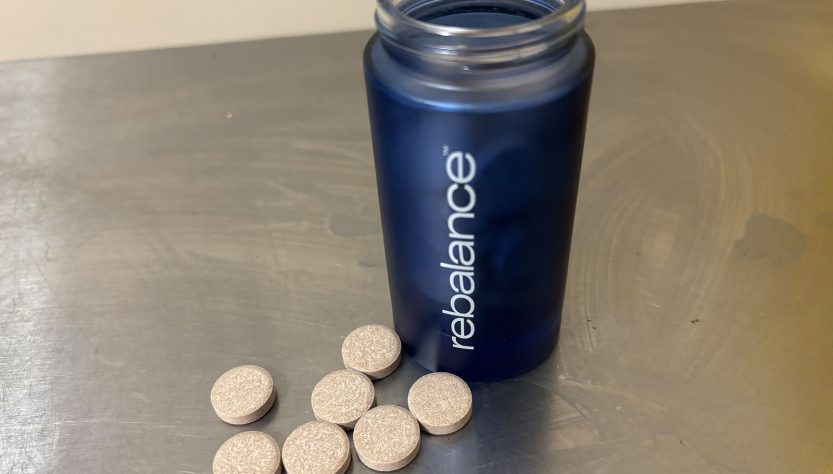
Rebalance Dream Sleep Mints (Melatonin-Free; 31-Pack) priced at $46: These five-time-melting mints without melatonin encompass natural soothing ingredients such as L-theanine, L-tryptophan, GABA, and a slow-releasing Reishi mushroom extract. Up to three lozenges can be consumed each night, and I needed all three to feel relaxed. I appreciate the concept of a mint that melts gradually, though I am also testing the melatonin variant for comparison.

Container with blue labeling next to round tablets on the countertop

Image Credit: Molly Higgins

Olly Sleep Gummy for $17: Olly’s popular gummy supplements are trending on social platforms and tend to sell out quickly. The blackberry-mint-flavored treats include 3 mg of melatonin, L-theanine, and various botanicals like chamomile. Although melatonin is generally deemed safe during pregnancy, it’s advisable to consult a healthcare provider. While my initial experience helped me fall asleep swiftly, the results were inconsistent, leading to a desire to raise my dosage repeatedly.

Kona Sea Salt Deep Ocean Magnesium Water Drops priced at $12: Kona’s offerings feature magnesium sourced from the deep ocean waters of Hawai’i, promoting sleep and muscle relaxation. From the range of products, I discovered the water drops to be the most effective. Only a drop per ounce of water is sufficient. While its advantages include the regulation of sleep patterns, it did not provide consistently robust results compared to others.

<a href="https://cna.st/affiliate-link/9PDXkxpg5or1rVwFFBbox7X27Cg2bSinvXnprsNq7rNf4E9rXmB3ZVCmUKg4xw2fJF6n1dDS8f7jqhfEtpA1joSqmRh2wQdrUDUmMqrBkNA9zkDKivs7LNA5nKwwgi9QUMuJb7kYpWmQ99X5xYCXzG3PHT7L8tCxKdvYRrd6weMa5hr9KCcptd8adzbud8zafo7qCTUSNGKv6VRQPzeAYkRDHfsggw1TfkT7HTS1rbmqDLhm3t4tEpWjfbMTryGiJLYZ3MLeeBemWgEfirL9D8

TechRadar | Dein Berater für Technik-Käufe

Bundesnetzagentur gestattet den Betreibern von Stromnetzen Drosselungen – Was bedeutet das für die Verbraucher

Deutschland strebt eine Energiewende an, weg von fossilen Brennstoffen hin zu erneuerbaren Energien. Allerdings bringt der Ausbau dieser Energiequellen einige Herausforderungen mit sich, insbesondere wenn es um die Strombereitstellung zu jeder Tageszeit geht. Die Bundesnetzagentur hat daher beschlossen, dass Netzbetreiber künftig den Bezug von Strom zeitweise begrenzen dürfen. Doch was bedeutet das konkret und wie kam es zu dieser Entscheidung?